



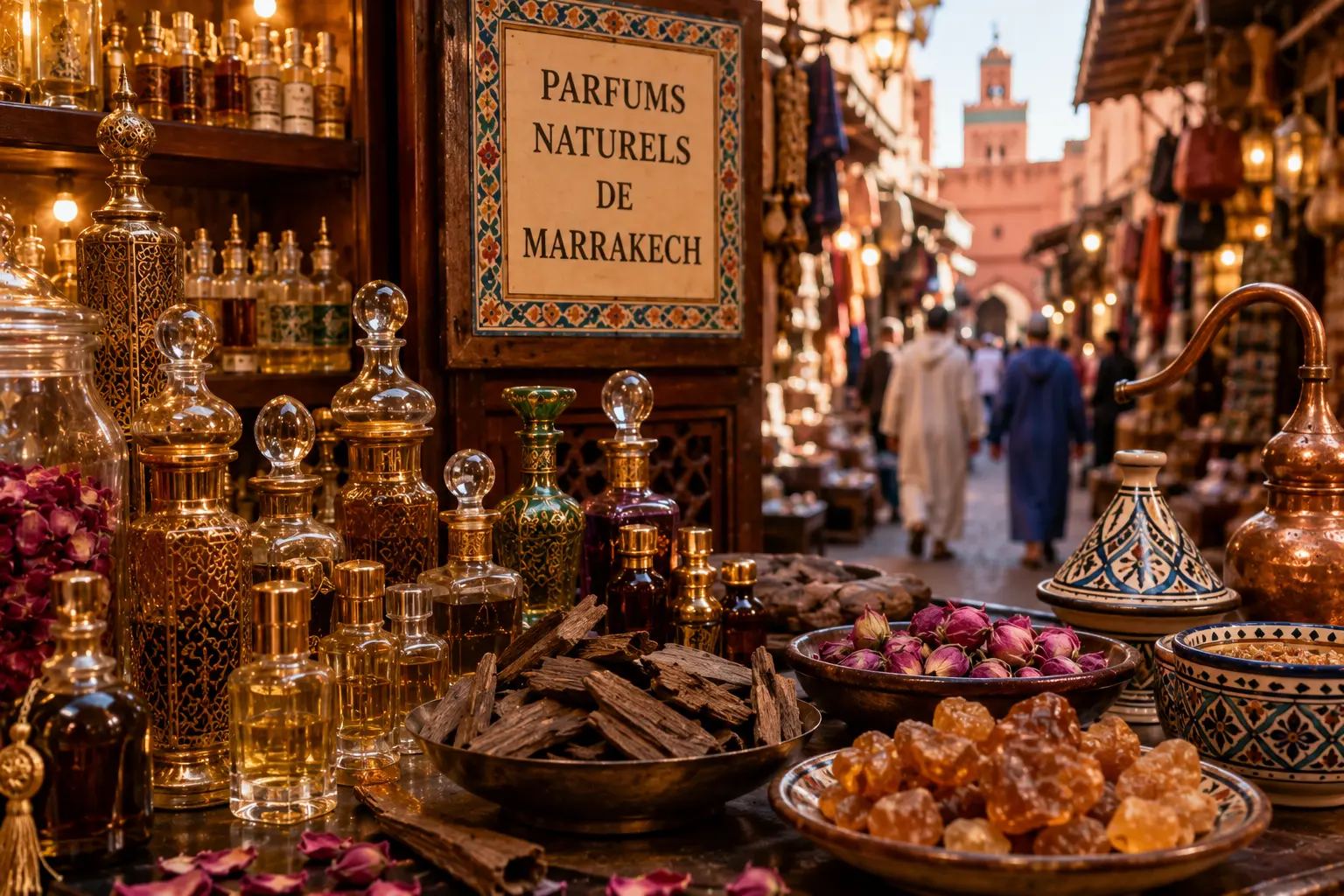
Ask any Moroccan grandmother what her home smells like and she will not say candles or air freshener. She will say orange blossom, rose water, and a little bit of amber from the small bottle by the door. Scent is woven into daily life here. It shows up in mint tea, in wedding gifts, and in how a home welcomes a guest.
Marrakech takes that culture and puts it on full display in the souks. Perfume shopping here is not like walking into a department store. It is a slower, more personal experience built around smell, conversation, and trust. This guide walks you through where to go and what to actually buy. It also shows you how to avoid an overpriced fake.
1. Where Perfume Shopping Happens in Marrakech
Souk El Attarine
Souk El Attarine is the traditional perfumers’ quarter of the medina. Its name literally means the souk of the herbalists and spice sellers.
Here you find spices, perfumed oils, and apothecary jars packed onto narrow shelves. Copper lanterns hang above stalls piled with rose petals and dried herbs. It is the natural starting point for anyone serious about Moroccan fragrance.
Herbalist Shops Across the Medina
Beyond Souk El Attarine, small herbalist shops sit scattered throughout the medina. Locals call these herboristeries, and nearly every neighborhood has one.
A good herbalist will explain how argan oil gets pressed from the argan nut. They will walk you through rose water, black soap, and dozens of perfumed oils. This is where real product knowledge lives, not flashy branding.
Gueliz and Modern Boutiques
If the souk feels overwhelming, Gueliz offers a calmer alternative. This newer part of the city has boutique perfume shops with fixed prices and polished displays.
You will pay a bit more here than after a good haggle in the medina. In exchange, you get clear labeling and a quieter shopping pace.
2. Key Moroccan Scents You Should Know
Rose and Orange Blossom
Rose and orange blossom sit at the heart of Moroccan fragrance culture. Both appear constantly in food, cosmetics, and hospitality rituals.
You will find them as pure essential oils and as delicate floral waters. They also show up as dominant notes inside blended perfumes. Orange blossom, called azahra locally, often has a bright floral opening with a soft smoky undertone.
Amber and Musk
Amber is warm, resinous, and a little sweet, often used as a base note. Moroccan musk, known locally as muska, is heady and rich.
Together they form the backbone of many traditional Moroccan perfume blends. These notes tend to be deep and long-lasting on the skin, rather than light or fleeting.
Oud, Saffron and Cedarwood
Oud is a dark, resinous wood note prized across North Africa and the Middle East. Genuine oud can be expensive, so pricing tells you a lot.
Saffron shows up in some perfume blends as a warm, slightly spiced note. Atlas cedarwood, sourced from Morocco’s own cedar forests, adds a dry, earthy depth to many local scents.
3. Best Perfume and Fragrance Shops
Herboristerie Reda
Herboristerie Reda is a small, trusted apothecary tucked into the souks. It stocks a wide range of products, including argan oil and perfumed body oils.
Quality here consistently gets praised by regular visitors. It works well as a first stop for an honest introduction to Moroccan scent. Go here before diving deeper into the market.
Heritage Berbere
Heritage Berbere blends western-style retail with traditional Moroccan fragrance offerings. It carries perfumes for men, women, and even the home.
Shoppers often describe finding one signature scent here that people later ask them about. The shop has more than one location, including a spot easily reached by taxi.
Marrakech Perfume Museum
The Marrakech Perfume Museum offers a calmer, more structured way to learn about Moroccan scent. It moves at a slower pace than the busy souks.
Visitors can join a hands-on perfume-making workshop here. You blend your own scent and take home a bottle as a personalized souvenir. It works especially well for families and curious first-timers.
Independent Perfume Oil Specialists
A handful of small independent shops focus purely on perfume oils rather than general herbalist goods. These specialists often stock rarer options, including aged or vintage oud.
Expect gold canisters lining the walls and knowledgeable owners eager to talk you through each scent. These shops reward slower browsing and genuine curiosity.
4. How to Buy Real Oud and Avoid Fakes
Oud is one of the most counterfeited fragrance ingredients sold to tourists. Genuine oud is rare, labor-intensive to produce, and priced accordingly.
If a bottle labeled as pure oud costs only a few dollars, treat that as a warning sign. Real oud, even in small quantities, tends to carry a noticeably higher price tag.
A trustworthy shop will let you smell the product before buying anything. They should also explain what is blended into the bottle. If a vendor gets vague or rushes you past questions, that is worth noticing.
Ask specifically whether a fragrance is a synthetic replica or a brand-name dupe. Many shops openly sell affordable inspired versions of famous perfumes. There is nothing wrong with that. It just needs to be sold honestly, not passed off as the real designer product.
5. Bargaining for Perfume the Right Way
Haggling is completely normal in the souks, including for perfume oils. Start by asking the vendor their price rather than naming one yourself first.
A reasonable opening counteroffer sits around half of what they first quote. Move up gradually from there based on how the conversation goes.
Keep the tone friendly rather than combative throughout the exchange. Vendors respond better to warmth than pressure, and it makes the whole process more enjoyable. If a fair price does not come together, it is fine to smile and walk away.
Conclusion
Buying perfume in Marrakech is really about slowing down and using your nose. Walk into a few shops, smell everything you are offered, and ask questions without worrying about being polite. The right bottle usually finds you once you stop rushing and start paying attention to what actually draws you in.
Do not go in with a fixed shopping list. Some of the best finds here are the ones you stumble into by accident. A vendor might hand you something you never planned to try. It can end up being the scent you keep thinking about back home.
Give yourself time, since a rushed visit rarely leads to a good decision. Sit with a scent for a few minutes before deciding if you love it. Ask the vendor what is actually inside the blend. Do not be shy about testing several options side by side.
Bring small notes home even if you only buy one bottle. Trust your own reaction over anyone else’s opinion, including this guide. Marrakech has a way of turning a simple errand into a small, memorable ritual. Perfume shopping here is no exception.
FAQs About Buying Perfume in Marrakech
What is the best souk for buying perfume in Marrakech?
Souk El Attarine is the traditional perfumers’ quarter and the best starting point. It is packed with spice stalls, perfumed oils, and apothecary shops in one concentrated area.
Is real oud expensive in Marrakech?
Yes, genuine oud is rare and labor-intensive to produce. A bottle priced very cheaply is almost certainly synthetic or heavily diluted, not authentic oud.
What are the most iconic Moroccan scents to buy?
Rose, orange blossom, amber, and musk are the most iconic Moroccan fragrance notes. Cedarwood and saffron are also worth trying if you want something less common.
Can I bargain for perfume the same way I bargain for other souvenirs?
Yes, haggling is expected and normal for perfumed oils in the souks. Start around half the vendor’s first price and negotiate upward with a friendly tone.
Are Moroccan perfume oils the same as alcohol-based perfumes?
No, most traditional Moroccan fragrances are oil-based rather than alcohol-based. Oil perfumes tend to last longer on the skin and smell slightly different as they develop over the day.
Is the Marrakech Perfume Museum worth visiting?
Yes, especially if the souks feel overwhelming or you want a slower, more educational experience. It also offers a hands-on workshop where you can blend and take home your own scent.
How do I know if a perfume oil is fake or authentic?
Ask the vendor directly whether it is a genuine ingredient or an inspired blend. Be cautious of extremely low prices on ingredients like oud, saffron, or rare musk. Authentic versions always cost more to produce.
Should I buy perfume in the medina souks or in Gueliz?
The medina souks offer lower prices after haggling and a more traditional experience. Gueliz boutiques offer fixed pricing, clearer labeling, and a calmer, less crowded shopping pace.


