



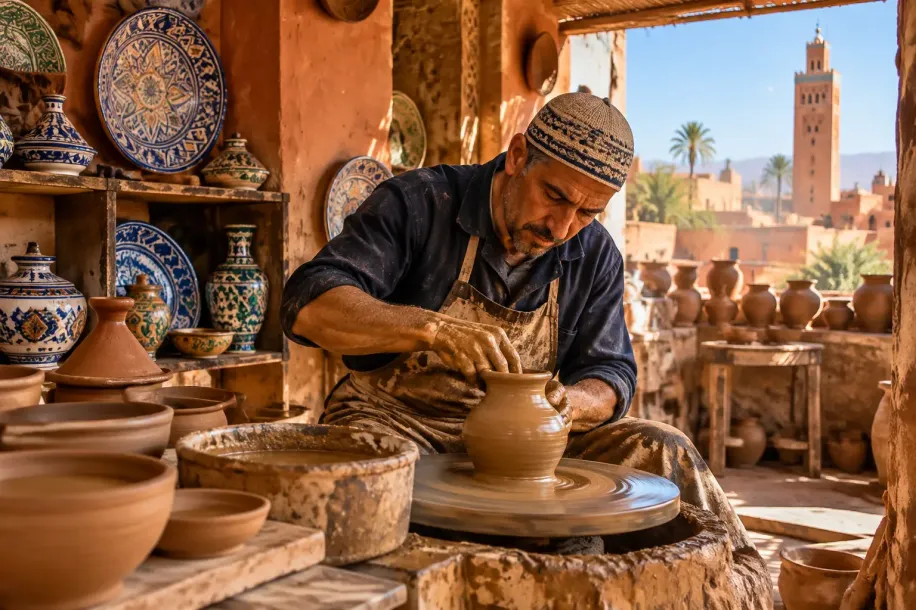
The first thing many visitors notice inside a traditional Marrakech pottery workshop is the sound. A kick wheel does not move quietly. The rhythm of the potter’s foot, the movement of the clay, and the careful shaping process create an atmosphere that feels completely different from a typical tourist activity.
For beginners, the first attempt is rarely perfect. Clay collapses, shapes become uneven, and the wheel can feel difficult to control. That is exactly what makes the experience memorable. Local artisans guide you through the process, helping you understand the patience and skill behind Morocco’s centuries-old pottery traditions.
A Marrakech pottery workshop gives travellers more than a handmade souvenir. It offers a chance to work directly with local artisans, learn traditional techniques, and understand how everyday Moroccan ceramics are created.
This guide covers the best pottery experiences in Marrakech, what you can expect to make, typical prices, and how to choose a workshop that offers a genuine artisan experience.
Where to Make Pottery in Marrakech: The Main Workshop Settings
Choosing the right location can change your entire experience. A short studio class in the city centre feels very different from visiting a traditional pottery village outside Marrakech.
1. Medina Pottery Studios
Small pottery studios inside or near the Marrakech medina are ideal for travellers with limited time.
Most sessions last around two hours and usually include:
- Basic clay preparation
- Hand-building techniques
- Beginner wheel practice
- Moroccan tea breaks
These workshops are convenient because they are close to major attractions such as Jemaa el-Fna and can easily fit into a busy Marrakech itinerary.
2. Traditional Pottery Villages Near Marrakech
For visitors looking for a deeper cultural experience, pottery villages outside the city provide a closer look at traditional production.
These workshops often include:
- Seeing how clay is prepared
- Watching artisans work with traditional tools
- Visiting drying areas and kilns
- Learning about local pottery styles
Many pottery workshops in Marrakech that include transportation take visitors to these artisan communities.
3. Sidi Ghanem Design Studios
Sidi Ghanem is Marrakech’s creative and industrial district, known for contemporary Moroccan designers and craft studios.
Pottery classes here usually have a more modern feel, combining traditional techniques with contemporary ceramic design.
This option works well for travellers who enjoy:
- Design-focused workshops
- Smaller studio environments
- Modern Moroccan craftsmanship
4. Safi Pottery Day Trips
Safi is considered one of Morocco’s most important pottery centres and is famous for its ceramic traditions.
However, it is located several hours from Marrakech, making it better suited for travellers planning a dedicated day trip rather than a short workshop experience.
For most visitors staying only a few days in Marrakech, a nearby artisan workshop provides a more practical pottery experience.
Choosing the Best Pottery Class in Marrakech
The best pottery class in Marrakech depends on what type of experience you want.
Some visitors simply want to create a ceramic piece and enjoy a relaxing afternoon. Others want to understand the full traditional process, from preparing clay to glazing and firing.
Short Creative Workshops
These sessions usually last 1.5–2 hours and focus on making something by hand.
They are suitable for:
- First-time visitors
- Families
- Couples
- Travellers with limited time
You can usually expect to create simple items such as:
- Bowls
- Cups
- Small decorative pieces
Half-Day Artisan Experiences
Longer workshops provide a more complete introduction to Moroccan pottery.
Depending on the studio, these may include:
- Clay preparation
- Traditional shaping methods
- Wheel throwing
- Painting or engraving
- Tea with local artisans
These experiences are better suited for travellers interested in Moroccan craftsmanship rather than only making a souvenir.
Recommended Pottery Workshops in Marrakech
Ateliers d’Ailleurs Pottery Workshop
Ateliers d’Ailleurs is a well-known craft workshop organiser offering traditional Moroccan craft experiences, including pottery.
Their pottery sessions introduce visitors to techniques such as:
- Wheel throwing
- Hand moulding
- Traditional ceramic methods
Classes are generally available in multiple languages and often include time to enjoy Moroccan tea during the experience.
This workshop is suitable for travellers who want an organised introduction to Moroccan crafts.
Atelier Lamsaty
Setting: Independent craft studio
Experience: Wheel throwing, hand modelling, and ceramic creation
Atelier Lamsaty offers a more personal studio environment where beginners can learn pottery techniques while working directly with artisans.
Sessions typically include:
- Introduction to clay
- Creating pottery forms
- Decorative techniques
- Time to enjoy Moroccan hospitality
If you want a smaller workshop environment away from the busiest tourist areas, this type of studio experience can be a good option.
Coopérative Naciri Mzouda Poterie
Setting: Traditional pottery cooperative outside Marrakech
This type of workshop offers a closer look at community-based pottery production.
- Visitors can experience:
- Traditional shaping methods
- Ceramic decoration
- Artisan demonstrations
- Local Moroccan pottery styles
Because it is outside the city, transportation arrangements should be confirmed before booking.
Yoma Handmade
Setting: Small independent studio
Yoma Handmade focuses on a more personal approach to pottery.
The experience combines:
- Hand modelling
- Wheel practice
- Ceramic painting
Small workshops like this are suitable for travellers who prefer a slower pace and more direct interaction with the person teaching the craft.
Arterre
Setting: Contemporary ceramic studio
Arterre combines traditional Moroccan pottery knowledge with modern ceramic design.
Workshops may include:
- Clay techniques
- Ceramic design concepts
- Wheel practice
- Creative projects
This option is suitable for beginners as well as visitors interested in the artistic side of ceramics.
Marrakech Pottery Workshop Price: What You Should Expect to Pay
The cost of a pottery class in Marrakech depends on the workshop location, session length, group size, and whether transportation is included.
A typical Marrakech pottery workshop price ranges from around 250 MAD to 1,000 MAD per person.
Here is a general guide:
| Workshop Type | Duration | Average Price |
|---|---|---|
| Short beginner pottery class | 1.5–2 hours | 250–450 MAD per person |
| Half-day artisan workshop with transport | 4–5 hours | 550–1,000 MAD per person |
| Private pottery experience | 3–4 hours | 900–1,500 MAD total |
| Family or private group sessions | Varies | Depends on group size |
Prices can change depending on the season, booking platform, and what is included.
Before confirming your booking, ask:
- Is transportation included?
- Is firing included in the price?
- Will you receive the finished piece?
- How long does the firing process take?
- Is the class private or shared?
What Happens During a Marrakech Pottery Workshop?
A typical pottery experience follows a simple process that introduces visitors to traditional Moroccan ceramic techniques.
1. Introduction and Workshop Tour
Most workshops begin with a short introduction to the artisan, the workspace, and the pottery process.
You may see:
- Raw clay materials
- Traditional tools
- Finished ceramic pieces
- Drying areas
This helps explain how Moroccan pottery moves from raw material to finished product.
2. Preparing the Clay
Before shaping begins, artisans prepare the clay by:
- Mixing materials
- Removing impurities
- Making the clay easier to work with
This stage shows the amount of preparation required before a single bowl or plate is created.
3. Demonstration by the Artisan
The artisan usually demonstrates the technique before guests begin.
You may learn:
- How to centre clay on the wheel
- How to control pressure
- How to shape the walls of a pot
- How to create basic forms
The process looks simple when performed by an experienced potter, but beginners quickly discover that controlling clay requires patience.
4. Creating Your Own Piece
Most beginner sessions focus on simple projects such as:
- Small bowls
- Cups
- Decorative items
- Traditional-style pottery pieces
Some workshops also include painting, engraving, or decorative techniques.
5. Moroccan Tea Experience
Many artisan workshops include Moroccan mint tea as part of the experience.
This is often the most relaxed part of the visit, giving guests time to speak with artisans and learn more about Moroccan craft traditions.
6. Drying and Firing Your Pottery
A finished piece usually cannot be taken home immediately.
Clay must go through:
- Drying
- Firing
- Sometimes glazing
The process may take several days or longer depending on the workshop.
If you are leaving Marrakech soon, ask whether the studio can:
- Ship your piece
- Keep it for later collection
- Provide a finished alternative
How to Choose an Authentic Moroccan Craft Workshop
Not every craft experience offers the same level of interaction with artisans. Before booking, look for signs that you are visiting a genuine workshop.
Signs of a Good Workshop
A quality authentic Moroccan craft workshop usually:
- Explains the process clearly before starting
- Shows where the work is created
- Provides transparent pricing
- Explains what is included
- Allows time to interact with artisans
- Has tools, unfinished pieces, and active production areas
Things to Confirm Before Booking
Ask these questions:
1. Is this a workshop or mainly a shop visit?
Some experiences focus heavily on selling finished products. A real workshop should include time where you actively create something.
2. Do I keep my finished piece?
Not every workshop includes firing and collection, so confirm beforehand.
3. How many people are in the class?
Smaller groups usually allow more personal guidance.
4. What techniques will I learn?
Some classes focus only on decoration, while others include actual pottery making.
Marrakech Workshops for Couples
A pottery class can be a memorable activity for couples visiting Marrakech.
Marrakech workshops for couples work especially well when the experience allows enough time to create, talk, and enjoy the process together.
Popular options include:
Private Pottery Classes
Private sessions allow couples to:
- Share an artisan’s guidance
- Spend more time at the wheel
- Create matching pieces
Zellige and Decorative Crafts
Couples who prefer detailed creative work may enjoy:
- Moroccan tile decoration
- Ceramic painting
- Traditional pattern design
Babouche Making
Leather slipper workshops offer a practical souvenir that can be used after the trip.
Marrakech Workshops for Families
Pottery is one of the most family-friendly craft activities in Marrakech because children can participate regardless of experience.
The best workshop depends on age.
Young Children
Short sessions with:
- Hand-building
- Painting
- Simple clay projects
usually work better than long technical classes.
Older Children and Teenagers
Longer workshops can introduce:
- Wheel throwing
- Traditional techniques
- Moroccan craft history
Many teenagers enjoy the challenge of creating something themselves.
Family Booking Tips
Before booking, check:
- Minimum age requirements
- Group size
- Seating arrangements
- Whether the workshop area is shaded or indoors
During warmer months, indoor studios or morning sessions are usually more comfortable.
Where Craft Workshops Fit Into a Marrakech Trip
A pottery workshop works best when included as part of a balanced Marrakech itinerary.
A simple three-day plan could look like:
Day 1
- Explore the Medina
- Visit Jemaa el-Fna
- Discover traditional markets
Day 2
- Morning pottery workshop
- Afternoon museum or garden visit
Day 3
- Atlas Mountains day trip
- Agafay Desert experience
- Additional cultural activities
A craft workshop is a slower experience compared with sightseeing, but that is exactly what makes it valuable. It gives visitors time to connect with local traditions instead of only observing them.
Frequently Asked Questions
Do I need pottery experience before joining a workshop?
No. Most Marrakech pottery classes are designed for beginners. Artisans usually start with basic techniques and guide visitors step-by-step.
Can I take my pottery home on the same day?
Usually not. Clay pieces often require drying and firing before they become durable. Ask the workshop about collection or shipping options.
How far in advance should I book a pottery workshop in Marrakech?
Booking a few days ahead is usually recommended, especially during busy travel seasons. Smaller studios may have limited availability.
Is Safi worth visiting for pottery?
Safi is an important pottery destination in Morocco, but it requires a full day because of the travel time from Marrakech. Visitors with limited time may prefer a local workshop closer to the city.
What should I wear to a pottery class?
Wear comfortable clothing that can get dirty.
Recommended:
- Closed shoes
- Comfortable clothes
- Sleeves that can be rolled up
What languages are pottery workshops taught in?
Many workshops offer French, English, or Arabic support. Confirm language availability when booking.
Are Marrakech pottery workshops suitable for people with limited mobility?
Accessibility varies. City studios may be easier to access than traditional village workshops, which can have uneven surfaces or low seating. Contact the workshop before booking to discuss requirements.
Final Thoughts
A pottery workshop in Marrakech is more than a simple activity. It offers a chance to slow down, meet local artisans, and experience a traditional craft that has been part of Moroccan culture for generations.
Choose a workshop based on the type of experience you want: a quick creative class in the city, a traditional artisan visit outside Marrakech, or a deeper hands-on cultural experience.
Ask what is included, confirm the process for collecting your piece, and give yourself time to enjoy the experience. The finished pottery may become a souvenir, but the memory of creating it with a Moroccan artisan is often what stays with travellers the longest.


