



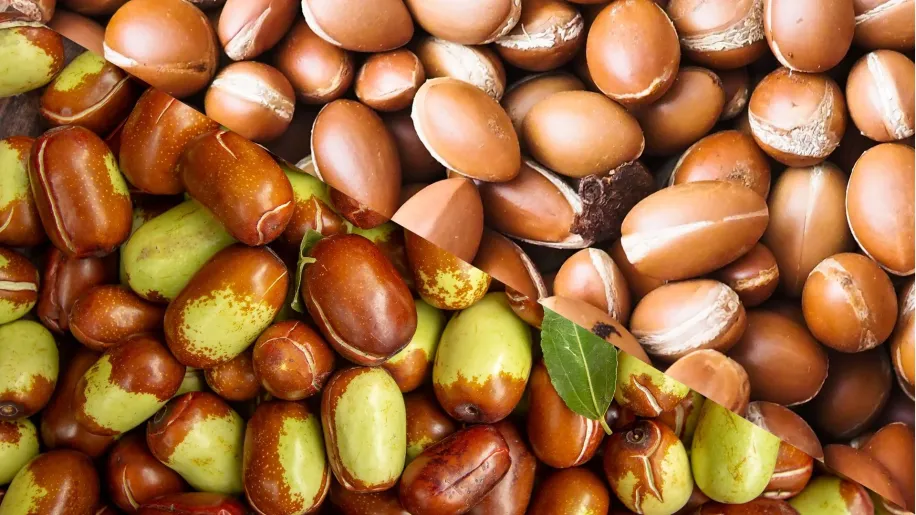
You are here in Morocco, and you are surrounded by so many beautiful things. Everywhere you look, people are talking about amazing oils. Two big names keep coming up again and again: Argan oil and Jojoba oil. Both are huge stars right now. Both promise to do great things for your hair and skin. But how are you supposed to choose? Which is better, jojoba or argan oil?
This quick guide is going to break down the oil fight: argan oil vs jojoba oil. We will look at what each one does best. When you finish reading this, you will know the perfect oil to pick for exactly what your body needs.
Where Do These Two Stars Come From?
- Argan Oil: This stuff is often called “liquid gold.” It comes from the Argan tree. This tree grows almost nowhere else but in Southwestern Morocco. It’s super special because the Argan tree is rare and very tough.
- Jojoba Oil: This oil comes from the Jojoba plant. You find this plant growing in the dry deserts of North America (think places like Arizona or Mexico). Fun fact: it’s not a heavy oil; it’s more like a “liquid wax.” That makes it different right away!
Argan Oil vs. Jojoba Oil: What’s the Real Difference?
Let’s look at these two side-by-side. Knowing the difference between jojoba oil and argan oil is the key to choosing wisely.
| Detail | Argan Oil (Moroccan) | Jojoba Oil (Desert) |
| Origin | Kernels from the Moroccan Argan tree | Seeds from the North American Jojoba plant |
| Texture | Rich, slightly thicker, looks like gold | Very light, clear, almost feels like water! |
| How it Sinks In | Gets absorbed well; leaves your skin feeling nourished and soft. | Absorbs super fast; feels like it disappeared right away. |
| Main Job | Deep moisture, fighting wrinkles, shine, fixing damage. | Balancing your skin’s oil, light hydration, and healing. |
| Pore Clogging Risk | Argan oil comedogenic rating: 0-1 (Almost never clogs pores). | Jojoba oil comedogenic rating: 2 (Still safe, but slightly higher risk). |
The Hair Challenge: Jojoba vs. Argan Oil for Hair
Both oils are good for your hair, but they fix different problems.
- Argan Oil for Hair: This one is a lifesaver for hair that’s dry, brittle, or just frizzy all the time.
- Argan oil benefits for hair: It gives that super deep moisture your hair wants. It adds a huge amount of shine. It helps seal those annoying split ends. If your hair feels dull or damaged, argan oil is your friend.
- Best Use: Use it for making your hair smooth, stopping frizz, and getting a great glossy finish.
- Jojoba Oil for Hair: This oil is amazing for your scalp itself. It helps keep the oil production up there steady and balanced.
- Jojoba vs argan oil for hair for scalp issues? Jojoba is the clear winner if you have a very oily or flaky scalp. It even helps clear up little blocks near the hair root. That makes it good for supporting growth from the scalp.
- Best Use: Use it for treating your scalp, calming oily hair, or just a very light touch of moisture.
The Skin Challenge: Jojoba vs. Argan Oil for Skin
Again, both are truly fantastic. Your skin type is the boss here!
- Argan Oil for Skin: Is argan oil good for skin? It’s amazing! It’s loaded with Vitamin E and things that fight damage.
- Argan oil vs jojoba oil for face (if your skin is dry or mature)? Argan is definitely richer. It’s better if you want deeper help fighting age. It totally drenches dry skin with moisture. It also helps your skin feel more stretchy and firm.
- Best Use: Use it for dry skin, fighting signs of age, healing scars, and serious moisture.
- Jojoba Oil for Skin: This oil is basically a twin of the natural oil your own body makes (called sebum).
- Jojoba vs argan oil for skin (if your skin is oily or sensitive)? Jojoba is often the favorite for skin that is oily, prone to breakouts, or very sensitive. It helps bring your natural oil back into balance. It cleans pores softly.
- The jojoba oil comedogenic rating is a 2, while the argan oil comedogenic rating is 0-1. So, is argan oil non comedogenic? Yes, it is very safe. Jojoba is safe too, but Argan is slightly safer if you worry about clogging.
- Best Use: Use it for oily skin, balancing oil, acne-prone skin, or just a light amount of daily moisture.
Which Oil Should You Buy?
I won’t tell you one is always better. That’s not possible! It just depends on what you need it to fix!
- Grab Argan Oil if… You desperately need strong moisture. Your hair is frizzy or just looks dead. Your skin is very dry or showing wrinkles. You want super shine and repair.
- Grab Jojoba Oil if… Your skin or hair tends to be oily. You want to bring your skin’s natural oils back into balance. Your skin is sensitive or breaks out easily. You prefer something with a super light feeling.
Lots of people just mix and match! They might use argan oil for deep nourishment for their hair ends and dry skin. Then they use jojoba for light moisturizing on their face or oily scalp. Why not try them both and see what your body loves most?
Also read: Where to buy Argan Oil in Marrakech
Simple FAQs: Jojoba vs. Argan Oil
Which oil feels lighter on the skin?
Jojoba oil feels much lighter. It’s actually a liquid wax, so it sinks in fast and feels very similar to your skin’s own oil. Argan oil is a bit richer.
If I have acne, which one should I use on my face?
Both are safe, but Argan oil has a slightly lower risk of clogging pores (the argan oil comedogenic rating is super low). Jojoba is great too because it helps control how much oil your face makes.
Which oil is better if my hair is very dry and frizzy?
You should choose Argan oil. Argan oil vs jojoba oil—Argan is much better for deep repair, adding heavy moisture, and giving that high-gloss shine to dry, brittle hair.
What is the main difference between Jojoba oil and Argan oil?
The main difference between jojoba oil and argan oil is their makeup. Argan is a pure plant oil for repair. Jojoba is technically a liquid wax, making it perfect for balancing your skin’s oil level.
Are both oils safe for my sensitive skin?
Yes, they are! Both oils are known for being gentle and are full of good vitamins. You can safely try either one, but many people find Argan oil best for soothing dry, irritated patches.


