



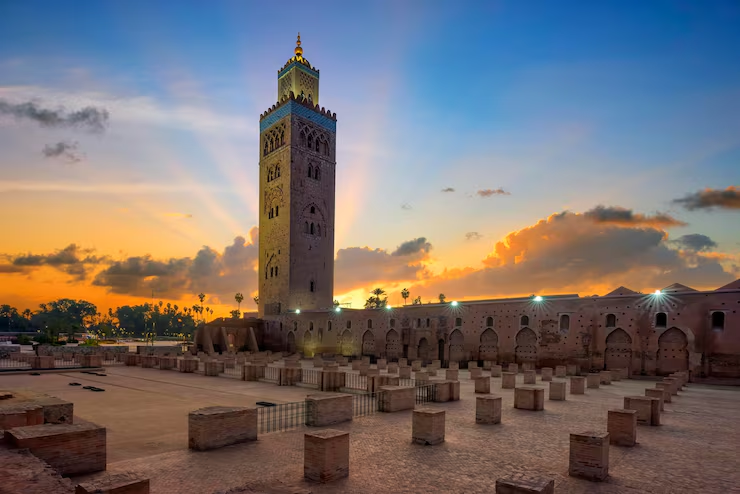
The Marrakech Safi region is a unique part of Morocco. It is the place where the country’s two souls meet. On one side, you have the high peaks of the Atlas Mountains. On the other side, you find the rugged cliffs of the Atlantic. It is a province that offers a bit of everything. You can wake up to a desert breeze. You can fall asleep to the sound of crashing waves.
In this guide, we will dive deep into the region Marrakech Safi. We will look at the famous cities and the hidden cultural gems. We will also cover the best ways to get around.
The Major Cities of the Region Marrakech and Safi
While Marrakech and Safi are the anchors, the region Marrakech Safi is a collection of diverse urban and rural centers. However, they feel like different worlds. Understanding each city is the key to a great trip.
1. Marrakech: The Red City Pulse
Marrakech is the heart of the region. People call it the “Red City.” This is because the walls are made of natural red clay. It is a city of high energy. It is also a city of many layers. On the surface, it is a busy tourist hub. Underneath, it is an ancient capital. Its soul has not changed in a thousand years.
The Medina is the old city center. It is a UNESCO World Heritage site. Walking here feels like a giant puzzle. You will find:
- The Souks: These are vast markets. You can find hand-woven rugs here. You can find hammered metal lanterns, too.
- Koutoubia Mosque: This is the tallest landmark. It acts as a compass for lost travelers.
- The Riads: These are hidden courtyard houses. They offer a silent escape from the busy streets.
2. Safi: The Industrial Artist
Safi is the rugged cousin of Marrakech. It sits right on the coast. It is not polished for mass tourism. That is exactly why you should visit. Safi is one of the most important ports in Morocco. It was once a Portuguese stronghold. You can see this in the Ksar El Bahr (The Castle of the Sea).
Today, Safi is famous for its pottery. The clay in the nearby hills is special. Local artisans have perfected their craft over centuries. Visit “Pottery Hill” to see this in person. You aren’t just looking at souvenirs there. You are seeing a living history of art.
3. Essaouira: The Windy City
Travelers often name Essaouira as their favorite spot. It is part of the same region and has a “hippy” soul. This fortified town loves music and art.
- The Vibes: It is famous for white-washed buildings and blue doors. It also hosts the annual Gnawa World Music Festival.
- The Activity: The city is a global hub for windsurfing. Kitesurfers flock here for the strong Atlantic winds.
4. Ben Guerir: The Green Future
Ben Guerir sits between Marrakech and Casablanca. It represents the modern side of the region. This “Green City” focuses on innovation and education. It houses the prestigious Mohammed VI Polytechnic University. It also serves as a vital link in the Marrakech Safi transport network.
Something New: The “Middle Path” Itinerary From Marrakech to Safi
Most tourists take a fast bus to the beach. They miss the best parts. To see something new, explore the Plateau de Rehamna. This land sits between the two cities.
Do not rush the Marrakech to Safi journey. Look for small villages along the way. Stop at roadside stalls. This “Middle Path” shows the agricultural heart of Morocco. You will see shepherds with their sheep. You will see vast groves of olive trees. You might find a local market that happens once a week. This is the real Morocco. It is far away from the fancy cafes of the big cities.
Culture, Flavors, and Traditions of Marrakech Safi
The culture here is a mix of many groups. It combines Arab, Berber, and Gnawa influences. You can see this in the music. You can taste it in the food.
The Sounds of the South
In Marrakech, you will hear the Gimbri. It is a string instrument with a deep sound. You will hear the rhythmic clacking of Krakebs. These are metal castanets. This is Gnawa music. It is a spiritual and hypnotic style. Many people go to big festivals to hear it. However, you should look for small shows. You can find them in the backstreets of Marrakech. You can find them in Safi too. These small shows feel much more authentic.
A Tale of Two Dishes
The landscape dictates the food.
- Marrakech’s Tanjia: This is not a Tagine. A Tanjia is usually made with lamb. It is put into a clay jug with lemons and garlic. Then, it is buried in hot ashes. The ashes come from a local hammam’s furnace. The meat becomes rich and buttery. It is a true Marrakech specialty.
- Safi’s Seafood: Safi is a leader in sardine exports. Go to the port area. You can eat sardines grilled over charcoal. They are pulled from the Atlantic just minutes before. The meal is simple and smoky. It is also very cheap.
Logistics: Mastering Marrakech Safi Transport
Travelers often worry about moving between the coast and the city. The Marrakech Safi transport network is quite good. You just need to know your options.
The Journey: Safi Marrakech Distance
The Safi Marrakech distance is about 150 kilometers. Are you driving a rental car? The trip is very straightforward. It takes about 2 hours and 30 minutes. You can take the R204 road. You can also use the A3 and A7 highways. The road is mostly flat. It cuts through beautiful dry plains.
Taking the Train (The Scenic Route)
Taking the train between Marrakech and Safi is a unique experience It requires some patience. There is no direct rail line.
- Start at the Marrakech Railway Station.
- Take a train north to a town called Benguerir.
- In Benguerir, switch to a different train.
- That train heads west to the coast.
- Total Time: This takes about 4 to 4.5 hours.
Why take the train? It is very comfortable. You get to meet local people. It is also a very safe way to travel. It is a great choice if you dislike Moroccan highway driving.
The Bus (The Direct Route)
The bus is the best choice for most people. It is the most efficient Marrakech Safi connection.
- Look for Supratours or CTM. These are the premium companies.
- They have many trips every day.
- The buses have air conditioning.
- They take you directly from one city center to the next.
Why the Bus is the Best Option:
- No Transfers: You do not have to switch vehicles or wait at a middle station like Benguerir.
- Point-to-Point: The bus goes from the city center of Marrakech to the city center of Safi.
- Speed: It is faster than the train. It usually takes about 3 hours, whereas the train journey (with the wait for the connection) takes over 4 hours.
- Frequency: There are multiple direct departures daily.
Hidden Gems You Should Not Miss in Safi Marrakech
Do you have extra days in the region Marrakech Safi? Step off the main path. Check out these three spots:
- Lalla Takerkoust: This is a huge man-made lake. It sits at the foot of the Atlas Mountains. It is a great day trip from Marrakech. You can go jet-skiing there. You can also just eat lunch by the water.
- The Salt Pans of Safi: These are located just outside the city. You can watch how sea salt is harvested. Workers use ancient evaporation methods. The white salt looks like small pyramids. They look beautiful against the blue sky. It is a dream for photographers.
- Sidi Kaouki: This is a surfer’s paradise south of Safi. It is much quieter than other beach towns. It offers a raw and wild experience. It is the perfect place to disconnect.
Planning Your Trip: A Quick Summary
Try to split your time. This helps you see both sides of the region. Spend 3 days in Marrakech. Use that time to see the history. Spend 2 days in Safi. Use that time to relax. Visit the pottery workshops there.
- Best Time to Visit: Go in the Spring (March to May). You can also go in the Autumn (September to November). Summer in Marrakech is very hot. It can reach 45°C. That is too hot for walking in the city.
- What to Pack: Bring comfortable walking shoes. The Marrakech streets are uneven. Bring a light jacket for Safi. The sea breeze can be chilly. This is true even in the summer.
Conclusion
The Marrakech–Safi region is not just a travel destination. It’s a change. It is the meeting point of ocean spray and desert heat. Prior to traveling, you should arrange your transportation and be aware of the distance. This facilitates navigating the trip.
You might be haggling for a rug in a loud souk. You might be watching a potter in a quiet shack. This region will stay in your memory. It is a place of deep beauty. It is a place of real tradition.
FAQs
Can I do a day trip from Marrakech to Safi?
It is possible, but very long. You will spend over 5 hours in transit.
What is the Safi Marrakech distance?
The distance is about 150 kilometers (roughly 93 miles). The road is well-paved and mostly flat.
Is there a direct train from Marrakech to Safi?
No. You must take a train from Marrakech toward Casablanca, get off at Benguerir, and board a connecting train west to Safi. This runs approximately twice daily.
Is Safi worth visiting if I have already been to Marrakech?
Yes. Safi offers a raw, coastal contrast to the imperial inland. It is the best place to find authentic Moroccan pottery and fresh, affordable Atlantic seafood.
Is the road safe for driving a rental car?
Yes, the route is straightforward. Use the R204 or the A3/A7 highways. Avoid driving at night.


