



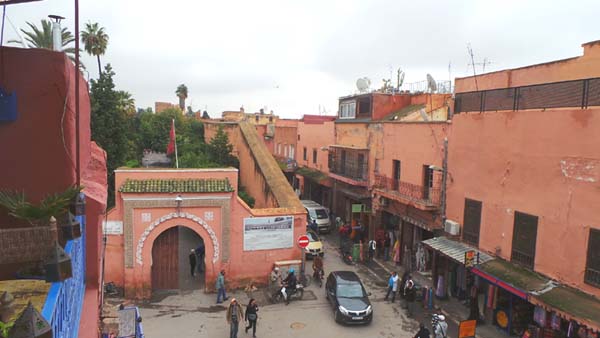
Mellah is a must-visit if you are considering a visit to Marrakech. It is the former Jewish area of the city. This quarter is situated right in the heart of Marrakesh.
The Mellah Marrakech reflects the history. It shows the rich culture of Marrakech. It is the testament to how many different people co-existed in Marrakech long ago.
The Mellah is a bustling area in lively Moroccan markets and quaint little alleyways. It truly felt like an escape into the past. The experience is really fascinating.
The name “Mellah” means “salt,” where this area was a major salt trading hub a long time ago. It has such a rich Jewish heritage that goes back hundreds of years, too. If you want more of a traditional tourist experience outside of the ordinary, then the Mellah could be a rewarding destination.
A Walk Through Time in the Mellah
When you walk through the Mellah, it feels like you are going back in time. The streets are narrow and turn a lot. The market stalls are very colorful and lively. The old Jewish architecture of the buildings gives you a strong feeling of what life was like here many centuries ago.
The Mellah’s Long Jewish History
The Jewish population of Marrakech is ancient. Some sources state its existence can be traced back to the 16th century. At the time, the Jewish population of the city was restricted to certain areas, often called the Mellah. They built homes, synagogues(places of worship), schools, and businesses. They formed a cohesive community or neighborhood living in proximity to one another and relying on each other in times of need. Now, the Jewish community remains in some fashion. Traces are still visible in the food, the buildings, and even the stores that you can find on many of the streets.

What You’ll Notice in the Mellah
The very first thing you will notice when you are walking in the Jewish quarter of Marrakech is how different it feels from the rest of the Medina. The Mellah feels more open. It has wider streets and is less busy and noisy than the other very crowded markets (called souks). You will find many beautiful old buildings here.
Some of these buildings are very old, from the 1500s. Many of the houses still have their original wooden doors and windows. These old doors and windows tell us that the people who built them long, long ago were very good at their work.
The Synagogues and Cemeteries of the Mellah
One of the most interesting things to see in the Mellah is the old synagogues that are still there today. These buildings show the rich history of the Jewish people who lived and did well in Marrakech a long time ago.
The most famous synagogue is called Slat al-Azama. It is very old, from the 1500s. Even if you cannot always go inside, it is good to try and find it. The Slat al-Azama is very beautiful and has a big part in history.
The Jewish Cemetery
The Jewish Cemetery located nearby offers visitors a quiet space to reflect. The cemetery is an important aspect of Jewish heritage for the city and has many significant figures from the Jewish community buried there. The graves are arranged in neat rows with Hebrew writing on each. It is a serene site that encapsulates the deep and long-lasting history of Jews in the city and region of Morocco.
Also, be sure to search for the other smaller synagogues located in the Mellah as well. Each little synagogue has its own unique charm and history. While the Jewish Community in Marrakech shrinks, they remain hopeful as these synagogues maintain an important aspect of the strength and survival of the Jewish community and culture in the city.
The Mellah Market: A Blend of Cultures
One of the best parts of the Mellah is its busy market. This market mixes old ways from both Jewish and Moroccan cultures. As you walk along the small streets, you will see shops selling many things. You can find spices, cloth, jewelry, and handmade Moroccan items.
Shopping in the Mellah
Shopping at the Mellah market is fun because you can find things you may not usually find in the larger markets in Marrakech. The Mellah market is not a commercialized area, and the shopkeepers are warm, and locals enjoy conversing with visitors to tell stories about the history of the area.
For those familiar with the Jewish history of the area, the Mellah market has kosher food and spices, as once there was a Jewish community in that area. The Mellah area has you covered whether you want a special souvenir from your vacation, or just want to enjoy the sights and smells of the market.
The Mellah market also has the Herbs and Spices Souk. This Souk has the best selection of the amazing smells the flavors of Morocco. At the Herbs and Spices Souk, you will be able to find fresh herbs, all kinds of spices, and dried flowers. Many of the spices, herbs, and dried flowers are used for traditional Jewish Moroccan cooking. You may be pleasantly surprised when the friendly shopkeepers offer you some of their homemade trial treats.
The Overlap Between the Mellah and Jewish Quarter of Fes
If you are fortunate enough to visit Morocco, you must not miss visiting the Mellah (plural: Mellah) in Marrakech, but of course, it is not the only site in Morocco where you can appreciate Jewish history.
The Jewish Quarter of Fes gives you a similar experience. But these are completely different in feel and ambiance. The Jewish quarter of Fes has narrow streets, old synagogues, and busy souks just like Mellah in Marrakech. It represents the story of a once-thriving Jewish community that has now sadly disappeared.
Visiting the Mellah of Marrakech is generally much easier for tourists. You can easily explore nearby famous attractions like the Bahia Palace and Jemaa el-Fnaa Square. nearby. This is best if you’re interested in learning more about Jewish heritage. Also, don’t want to stray too far from central Marrakech during the exploration.
Why Visit the Mellah?
So, why visit the Mellah? The Mellah essentially gives you a chance to experience a part of Marrakech that few tourists will likely see. This is aside from its inherent historical significance.
Many follow the crowds through the busy souks or head straight for the more memorable sites. The Mellah gives you an opportunity for quiet contemplation and observation.
You’ll also experience the blending of Jewish and Moroccan cultures that have come to define that portion of the city. The Mellah will provide insights into multiculturalism from the architecture to the food. One that has been found all around Marrakech for hundreds of years.
In short, a visit to the Mellah will not disappoint if you are a history buff, a photo enthusiast, or simply looking to see a different facet of Marrakech. It is one of the relatively few places in the city where one can connect to the history of that city, even if it is not as well-known as some of the other attractions in Marrakech.
FAQs About the Mellah in Marrakech
What is the Mellah in Marrakech?
Mellah means the Jewish quarter of Marrakech. It was established in the 16th century and was a bustling and vibrant community of Jews with synagogues and cemeteries, and Moroccan buildings of early architecture that still stand today.
Can you visit the Jewish Quarter in Fes as well?
Yes, Fes also possesses an old Jewish quarter referred to as the Jewish Quarter of Fes. Similar to the Mellah of Marrakech, the Jewish Quarter of Fes is fascinating and allows visitors the chance to learn about such rich Jewish history in Morocco.
Are the synagogues in the Mellah open to visitors?
Some synagogues are open to visitors in the Mellah, but at times, access will be limited. One of the most popular ones to visit is the Slat al-Azama Synagogue to learn about the Jewish community of Marrakech.
Is the Mellah market a good place for shopping?
Absolutely! The Mellah market has lots of interesting items for you to see, including spices, textiles, jewelry, and other traditional Moroccan crafts. It provides a more local, intimate shopping opportunity compared to the other larger souks in Marrakech.
What is the best time to visit Mellah?
The best time to visit the Mellah market is in the morning or late afternoon when the weather is cooler and the market is active. If you have history and culture on your mind, you can visit the Mellah anytime during the day.


