



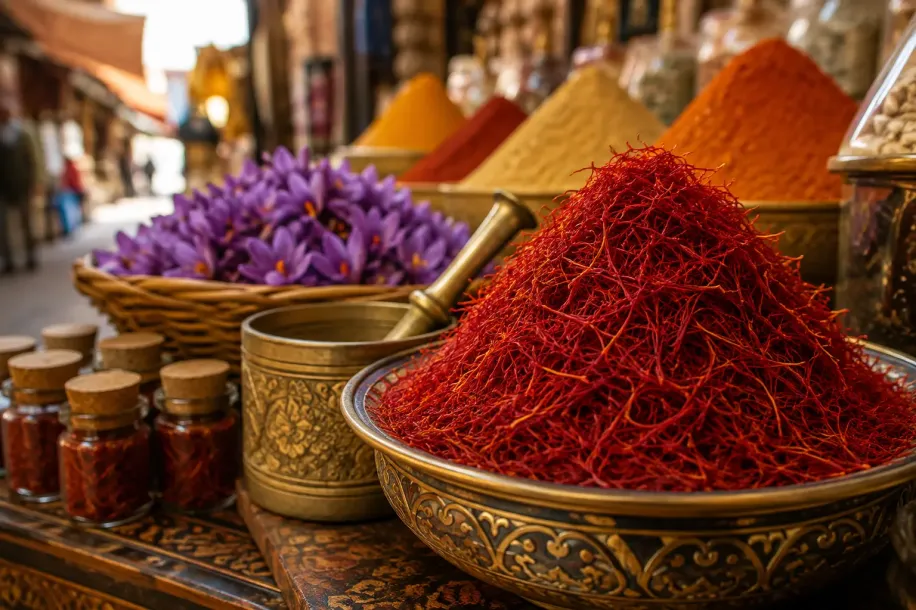
Few souvenirs carry more meaning than a small tin of real saffron Marrakech vendors have sold for generations. This deep red spice, harvested by hand from crocus flowers, remains one of Morocco’s most prized exports. But not everything labeled saffron in the medina is genuine.
I have watched tourists overpay for dyed corn silk more times than I can count. This guide walks you through exactly where to buy saffron in Marrakech, how to spot the real thing, and what a fair price actually looks like.
Why Moroccan Saffron Is Worth Seeking Out
Moroccan saffron comes almost entirely from the Taliouine region in the Atlas Mountains, where cool nights and dry soil produce some of the most fragrant threads in the world. Farmers hand-pick each crocus flower at dawn, then extract the three thin stigmas that become the spice you see in shops.
Because harvesting is so labor-intensive, genuine saffron never comes cheap. A single kilogram requires roughly 150,000 flowers. This scarcity is exactly why fake saffron has become such a common problem across tourist markets in Marrakech. That is why you need to be really careful when it comes to buying the best saffron in Marrakech.
Best Places to Buy Saffron in Marrakech
If you are wondering about the best place to buy saffron in Marrakech, the answer depends on how much you trust bargaining versus fixed pricing. Each option below offers a different mix of authenticity, convenience, and cost, so pick based on how much time you want to spend verifying quality yourself.
1. Rahba Kedima Spice Square
Rahba Kedima is the small square just off Jemaa el-Fnaa, is where most travelers start. Dozens of vendors here have run family stalls for generations, stacking their counters with pyramids of saffron, turmeric, and ras el hanout. Its specialty is variety: you can compare threads from multiple sellers within a few steps and negotiate openly.
The trade-off is that some stalls cater heavily to tourists and price accordingly. Expect to pay 40 to 70 dirhams per gram at the more tourist-facing stalls, though patient bargaining with a vendor who lets you test threads in water can bring that down closer to fair value.
2. Souk El Attarine
Once Medina’s dedicated spice and perfume souk, Souk El Attarine has shrunk over the decades but still holds a handful of long-standing vendors. Its specialty is depth of knowledge. Sellers here have typically worked the trade for decades and can speak in detail about grade, harvest region, and storage.
Because it draws fewer tourists than Rahba Kedima, pricing tends to run fairer, often in the 30 to 50 dirhams per gram range for quality threads.
3. Souk Semmarine Spice Stalls
Souk Semmarine is one of the Medina’s main thoroughfares, and spice sellers appear scattered between textile and leather shops rather than concentrated in one square. Its specialty is convenience, since you can pick up saffron while already exploring the busiest part of the souk without a special detour.
Quality varies stall to stall more than in dedicated spice squares, so testing before buying matters even more here. Prices typically land between 35 and 60 dirhams per gram.
4. Mellah Spice Shops
The Mellah, Marrakech’s historic Jewish quarter, is home to smaller, family-run spice shops known for consistent quality and clearer labeling than the busier tourist squares. Its specialty is trust built over repeat local custom rather than one-time tourist sales.
Vendors here are generally less aggressive with pricing tactics, and quality threads often sell for 20 to 25 dirhams per gram, among the fairer rates in the old city.
5. Ensemble Artisanal de Marrakech
This government-run artisanal complex, located near Avenue Mohammed V, sells goods at fixed, clearly marked prices with no bargaining required. Its specialty is peace of mind for travelers who find negotiation stressful or simply want a guaranteed fair price without back-and-forth.
Selection is narrower than the souks, and saffron here typically costs 30 to 45 dirhams per gram, reflecting the fixed, no-haggle pricing model.
6. Taliouine-Sourced Cooperative Outlets
Several Marrakech shops sell saffron sourced directly from women’s agricultural cooperatives based in the Taliouine region, such as those producing AOP-certified saffron under strict quality controls. Their specialty is traceability. Many of these products carry certification papers and cooperative labeling that name the exact source region.
Buying cooperative-sourced saffron also supports fair wages for the farming families who hand-harvest it. Expect to pay 35 to 55 dirhams per gram, slightly higher than souk prices, in exchange for verified origin and quality grading.
7. Nectarome and the Jardin Bio-Aromatique d’Ourika
Roughly 35 kilometers outside Marrakech in the Ourika Valley, this organic garden and shop specializes in herbal, aromatic, and cosmetic products grown on-site, with saffron available alongside argan oil and herbal blends. Its specialty is a farm-to-shop experience, letting you see the growing operation before buying.
It suits travelers combining a saffron purchase with a day trip to Ourika rather than those shopping only within the city. Pricing generally falls in the 30 to 50 dirhams per gram range.
8. Herboriste Apothecary Shops
Traditional herboriste shops, found throughout the medina and Mellah, specialize in medicinal herbs, spices, and natural remedies, often run by knowledgeable owners who explain each product’s use. Their specialty is guidance, since a good herboriste will walk you through freshness, grading, and proper storage before you buy.
These shops tend to price saffron around 25 to 45 dirhams per gram, with quality generally reliable given the owner’s reputation depends on repeat local customers.
9. Carrefour Market Marrakech
For travelers who want zero negotiation and guaranteed labeling, Carrefour’s Marrakech locations, including the branch in Gueliz, stock pre-packaged saffron with fixed pricing and clear ingredient labeling. Its specialty is convenience and consistency rather than premium grade.
Quality generally sits a notch below souk-sourced threads, but pricing is transparent and predictable, typically 25 to 35 dirhams per gram for packaged saffron.
10. Marjane Hypermarket
Marjane, Morocco’s other major supermarket chain, offers a similar experience to Carrefour with fixed shelf pricing and no bargaining. Its specialty is accessibility for travelers staying near Gueliz or outside the medina who want a quick, reliable purchase without souk navigation.
Expect pricing similar to Carrefour, generally 25 to 35 dirhams per gram, with dependable but mid-tier quality compared to cooperative or specialty sources.
Each of these counts as a legitimate option among saffron shops Marrakech travelers can trust, though prices and quality vary widely between them. If authenticity and traceability matter most, prioritize the Mellah shops and Taliouine-sourced cooperative outlets. If convenience matters more, the supermarkets remove any guesswork at the cost of prestige.
What to Expect in Marrakech Spice Market Saffron
Walking through the Marrakech spice market saffron stalls feels like stepping into a different century. Sacks of turmeric, cumin, and paprika sit beside glass jars of saffron threads, each vendor eager to demonstrate quality by rubbing a few strands between their fingers.
Do not be afraid to ask questions here. Reputable sellers welcome them and often explain where their saffron was harvested. Vague or evasive answers usually signal a lower-quality product being passed off as premium.
Where to Buy Taliouine Saffron in Marrakech
For the most serious saffron shoppers, where to buy Taliouine saffron in Marrakech is the real question worth asking. Look specifically for vendors who mention Taliouine by name and can show packaging or certificates referencing the region. Some cooperatives even display photos from the harvest itself.
Buying directly tied to Taliouine origin gives you the strongest guarantee of authenticity. It also supports the farming communities responsible for cultivating this labor-intensive crop.
How to Identify Authentic Moroccan Saffron
Knowing how to identify authentic Moroccan saffron protects you from wasting money on fakes. Genuine threads are deep red with slightly orange tips, never bright red all over. They should feel dry and brittle, not soft or waxy.
Drop a few threads into warm water. Real saffron releases color slowly, turning the water a golden yellow over several minutes. Fake versions, often dyed corn silk or safflower, release color almost instantly and in a much redder shade.
How to Avoid Fake Saffron in Marrakech
Learning how to avoid fake saffron in Marrakech starts with slowing down and inspecting before you buy. A few practical checks help:
- Smell the threads. Real saffron has a distinct, slightly sweet, hay-like aroma
- Avoid pre-ground saffron powder, since it is easiest to fake
- Buy from vendors who allow you to test threads in water before purchasing
- Be suspicious of unusually low prices for large quantities
Authentic saffron Marrakech sellers rarely pressure you into quick decisions. Rushed sales tactics are often a warning sign worth trusting.
How Much Does Saffron Cost in Marrakech?
How much does saffron cost in Marrakech is one of the most common questions travelers ask before shopping. Genuine saffron typically runs between 25 and 40 dirhams per gram, depending on quality and where you buy it. Cooperative shops tied directly to Taliouine tend to sit at the higher end but offer stronger authenticity guarantees.
What is a fair price for saffron in Marrakech ultimately comes down to grade and origin. Premium, hand-sorted saffron costs more than lower-grade threads mixed with stems, so always ask which grade you are being offered.
Is Saffron Cheaper in Marrakech?
Is saffron cheaper in Marrakech compared to buying it back home? Almost always, yes. Even at fair local prices, Moroccan saffron costs a fraction of what you would pay for imported saffron in most Western supermarkets or specialty stores.
That said, cheaper does not always mean better value if quality is compromised. Paying a slightly higher price for verified, high-grade saffron from a trusted vendor is usually worth it.
How to Buy Real Saffron in Marrakech: A Quick Checklist
If you only remember one section, let it be this one on where to buy real saffron in Marrakech:
- Choose vendors who can name their source region
- Test threads in warm water before committing
- Compare prices across at least two or three shops
- Avoid pre-packaged tourist gift sets sold at inflated prices
- Ask for a small sample bag before buying larger quantities
Can You Bring Moroccan Saffron Home?
Many travelers ask can you bring Moroccan saffron home without customs issues. In most countries, dried spices like saffron are allowed in personal luggage without special permits, though it is always worth checking your destination country’s specific import rules before departure.
Pack saffron in its original sealed container or a small airtight tin to keep it fresh during travel. Stored properly, away from light and moisture, good saffron stays potent for up to two years.
Final Thoughts
Finding genuine Moroccan saffron Marrakech markets takes a little patience, but the reward is worth it. Whether you shop at Rahba Kedima, a Mellah spice shop, or a Taliouine cooperative, the same rules apply: test before you buy, ask questions, and trust vendors who welcome scrutiny rather than avoid it.
A small tin of real saffron carries the story of Morocco’s mountains, farmers, and centuries-old trade routes. That is a souvenir worth getting right.
FAQs
Is saffron cheaper in Marrakech?
Yes, in most cases. Even fair, honest prices in Marrakech tend to be far lower than saffron sold abroad, especially when bought directly from Taliouine-linked vendors.
What is a fair price for saffron in Marrakech?
Expect to pay roughly 25 to 40 dirhams per gram for high-quality, authentic saffron, with slight variation depending on grade and vendor.
How to identify authentic Moroccan saffron?
Look for deep red threads with orange tips, a hay-like aroma, and slow color release when placed in warm water.
How to avoid fake saffron in Marrakech?
Test threads before buying, avoid powdered saffron, and steer clear of vendors offering unusually low prices for large quantities.
Where to buy real saffron in Marrakech?
Rahba Kedima spice square, trusted Mellah spice shops, and cooperatives sourcing directly from Taliouine are the most reliable options.
Where to buy Taliouine saffron in Marrakech?
Look for cooperative shops or specialty vendors who specifically name Taliouine as their source and can show certification or origin details.
Can you bring Moroccan saffron home?
Yes, dried saffron is generally allowed in personal luggage, though it is wise to confirm your home country’s import rules beforehand.


