



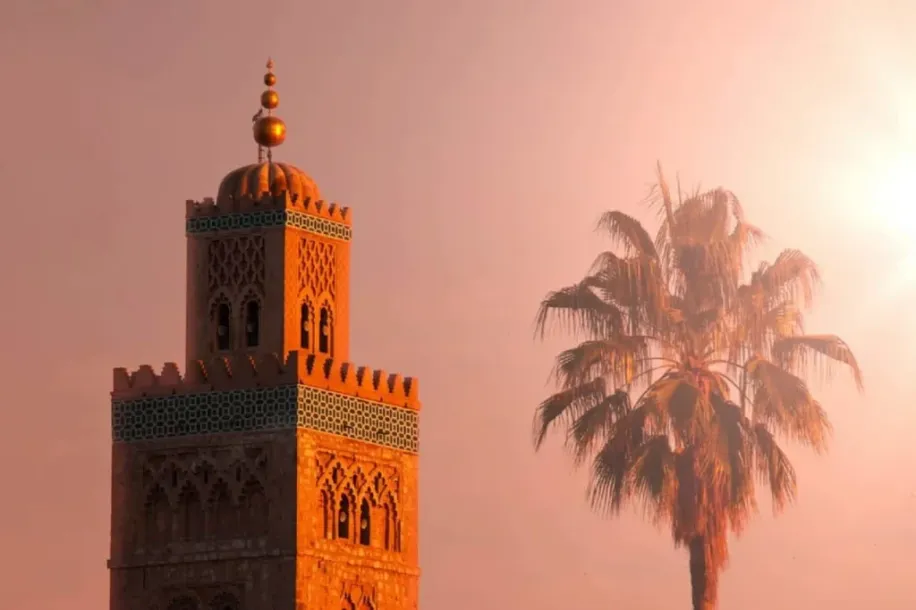
Marrakech is a city built for the lens. Known as the “Ochre City” due to its distinct clay- and sandstone-washed architecture, the historic capital blends deep North African traditions with striking design. For travel photographers and content creators, the ancient Medina—a UNESCO World Heritage site—presents an incredible mix of colors, sharp geometric patterns, and dramatic desert light. To help you capture the true spirit of this Moroccan destination while respecting local customs, this guide covers the most photogenic locations, ideal camera angles, and vital cultural travel tips.
The central courtyard features a large, shallow marble reflection pool. Look up to see the breathtaking zellige tilework, carved stucco crust, and cedarwood balcony windows where students used to live.
Bring a wide-angle lens. Stand directly at the end of the reflection pool to snap a symmetrical shot framing the central archway. For a different perspective, walk upstairs to the student dormitories and frame a shot looking down into the courtyard through the geometric wooden window lattices.
Arrive exactly at 9:00 AM opening time. The crowds build rapidly within 30 minutes, making clean compositions difficult.
2. Jardin Majorelle (Majorelle Garden)
The defining feature is the Cubist villa painted in an intense, patented cobalt shade known as Majorelle Blue. This deep blue creates an incredible visual pop against the dusty orange pathways and the giant green cacti, bamboo groves, and water lilies surrounding it.
Focus on high-contrast portraits and minimalist architectural shots. The bright yellow flower pots lining the blue walls offer perfect natural framing elements. Avoid midday shooting, as the thick overhead canopy creates harsh, patchy shadows on faces.
Advance online booking with a strict timed-entry slot is required. Snag the very first 8:00 AM slot to wander the paths before the walkways fill up.
The Grand Courtyard is a massive open-air space paved in blue and yellow marble, surrounded by elegant carved archways. The interior rooms feature stained-glass windows that cast vibrant, colorful light across the floors when the sun sits at a low angle.
Look up. The painted cedarwood ceilings are incredibly detailed and often ignored. If the courtyards are packed with tourists, pivot to vertical compositions focusing on the ornate arches, grand doorways, and symmetrical window frames to keep people out of your shot.
Mid-morning or late afternoon. The palace is large enough to find quiet corners even during busier hours.
Specific sections are dedicated to different crafts. The Souk Semmarine features massive textile and leather displays. Place des Épices (the spice market) offers towering conical mounds of brightly colored spices, woven baskets, and traditional herbs.
La Menara Lantern Shop: A famous boutique packed floor-to-ceiling with glowing brass lamps and lanterns that resemble an Aladdin’s cave. Herboristerie Avicenne: A photogenic spice shop with beautifully arranged jars of pigments and dried botanicals.
Street Photography Etiquette:
Always ask shopkeepers for permission before taking a photo of them or their products. If you want to spend time shooting inside a specific stall (like the lantern shops), it is customary to buy a small item or offer a small tip (10–20 MAD) to the owner for their time.
The chaotic energy of the square is best viewed from an elevated vantage point where you can see the entire landscape stretching toward the horizon.
Do not photograph street performers or snake charmers at ground level unless you are prepared to pay a significant tip. Instead, head to one of the iconic rooftop spaces overlooking the square, such as Le Grand Balcon du Café de la Poste, Nomad, or Café des Épices.
Set up your tripod or steady your camera on a rooftop railing just before sunset. Capture the transition as the sky turns a dusty pink, the street lamps ignite, and the smoke from the charcoal food stalls rises over the square, with the historic Koutoubia Mosque minaret standing tall in the distance.
The Clay Walls: The walls of the Medina are coated in a local pinkish-orange clay plaster. The way the golden hour light reflects off these salmon-toned alleys creates a soft, warm glow that acts as a natural beauty filter for portraits. Traditional Riads: A riad is a traditional Moroccan house built around an interior courtyard. Many operate as boutique hotels or cafes (such as Riad Yasmine, Riad BE, or La Sultana). These hidden spaces offer beautiful tiled plunge pools, emerald-green indoor plants, and quiet, serene settings that contrast completely with the frantic energy of the streets outside.
Summary: Creative Planning Guide
Ben Youssef Madrasa
Crucial Cultural Tips for Photographers
Conclusion
Marrakech is a city that rewards the patient, observant photographer. From the quiet geometric symmetry of the ancient Ben Youssef Madrasa to the chaotic, smoky energy of Jemaa el-Fnaa at sunset, the city offers an endless array of visual stories. The secret to capturing its true beauty lies in the balance between preparation and flexibility. By planning your visits early in the day to beat the crowds, packing the right lenses for the tight alleys, and always respecting local customs, you will walk away with a stunning portfolio that captures the authentic soul of Morocco.


