
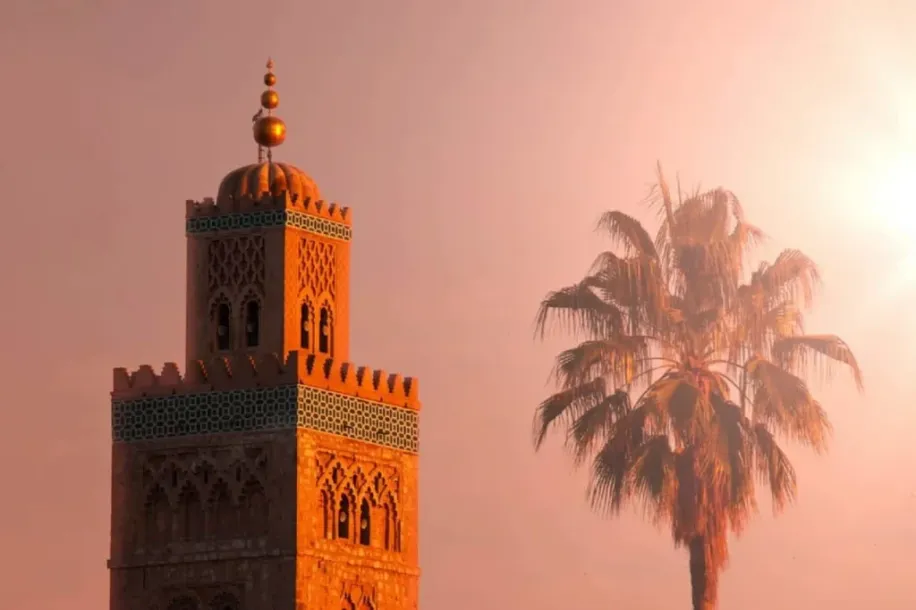
Best Photography Spots in Marrakech

marrakech

Marrakech is a city built for the lens. Known as the “Ochre City” due to its distinct clay- and sandstone-washed architecture, the historic capital blends deep North African traditions with striking design. For travel photographers and content creators, the ancient Medina—a UNESCO World Heritage site—presents an incredible mix of colors, sharp geometric patterns, and dramatic desert light.   To help you capture the true spirit of this Moroccan destination while respecting local customs, this guide covers the most photogenic locations, ideal camera angles, and vital cultural travel tips.

1. Ben Youssef Madrasa (Medersa Ben Youssef)

Once the largest Islamic college in North Africa, this 16th-century theological school stands as an absolute masterpiece of Moorish architecture. It is arguably the most visually striking indoor site in the entire city.

What to Look For: 

The central courtyard features a large, shallow marble reflection pool. Look up to see the breathtaking zellige tilework, carved stucco crust, and cedarwood balcony windows where students used to live.

Photography Tips: 

Bring a wide-angle lens. Stand directly at the end of the reflection pool to snap a symmetrical shot framing the central archway. For a different perspective, walk upstairs to the student dormitories and frame a shot looking down into the courtyard through the geometric wooden window lattices.

Best Time to Visit

Arrive exactly at 9:00 AM opening time. The crowds build rapidly within 30 minutes, making clean compositions difficult.

2. Jardin Majorelle (Majorelle Garden)

Created by French painter Jacques Majorelle over four decades and later rescued by fashion legend Yves Saint Laurent, this botanical garden is a bold contrast of electric colors and raw nature.

What to Look For:

The defining feature is the Cubist villa painted in an intense, patented cobalt shade known as Majorelle Blue. This deep blue creates an incredible visual pop against the dusty orange pathways and the giant green cacti, bamboo groves, and water lilies surrounding it.

Photography Tips

Focus on high-contrast portraits and minimalist architectural shots. The bright yellow flower pots lining the blue walls offer perfect natural framing elements. Avoid midday shooting, as the thick overhead canopy creates harsh, patchy shadows on faces.

Best Time to Visit

Advance online booking with a strict timed-entry slot is required. Snag the very first 8:00 AM slot to wander the paths before the walkways fill up.

3. Bahia Palace

Built in the late 19th century, the Grand Bahia Palace was designed to be the greatest palace of its time. Its name literally translates to “brilliance,” and its massive sprawling rooms highlight the peak of traditional Moroccan craftsmanship.

What to Look For

The Grand Courtyard is a massive open-air space paved in blue and yellow marble, surrounded by elegant carved archways. The interior rooms feature stained-glass windows that cast vibrant, colorful light across the floors when the sun sits at a low angle.

Photography Tips: 

Look up. The painted cedarwood ceilings are incredibly detailed and often ignored. If the courtyards are packed with tourists, pivot to vertical compositions focusing on the ornate arches, grand doorways, and symmetrical window frames to keep people out of your shot.

Best Time to Visit: 

Mid-morning or late afternoon. The palace is large enough to find quiet corners even during busier hours.

4. The Vibrant Souks of the Medina

The open-air markets, or souks, spreading out from the central square form the beating heart of Marrakech. For street photographers, the sensory overload translates into rich environmental portraits and dense, texture-heavy imagery.

What to Look For:

Specific sections are dedicated to different crafts. The Souk Semmarine features massive textile and leather displays. Place des Épices (the spice market) offers towering conical mounds of brightly colored spices, woven baskets, and traditional herbs.

Key Photo Spots:

  1. La Menara Lantern Shop: A famous boutique packed floor-to-ceiling with glowing brass lamps and lanterns that resemble an Aladdin’s cave.  
  2. Herboristerie Avicenne: A photogenic spice shop with beautifully arranged jars of pigments and dried botanicals.

Street Photography Etiquette:

Always ask shopkeepers for permission before taking a photo of them or their products. If you want to spend time shooting inside a specific stall (like the lantern shops), it is customary to buy a small item or offer a small tip (10–20 MAD) to the owner for their time.

5. Jemaa el-Fnaa Square & Rooftop Cafes

Jemaa el-Fnaa is the main square of Marrakech. At night, it transforms into a massive theatrical stage filled with food stalls, musicians, storytellers, and snake charmers.

What to Look For: 

The chaotic energy of the square is best viewed from an elevated vantage point where you can see the entire landscape stretching toward the horizon.

Photography Tips: 

Do not photograph street performers or snake charmers at ground level unless you are prepared to pay a significant tip. Instead, head to one of the iconic rooftop spaces overlooking the square, such as Le Grand Balcon du Café de la Poste, Nomad, or Café des Épices.

The Golden Hour Shot

Set up your tripod or steady your camera on a rooftop railing just before sunset. Capture the transition as the sky turns a dusty pink, the street lamps ignite, and the smoke from the charcoal food stalls rises over the square, with the historic Koutoubia Mosque minaret standing tall in the distance.

6. The Pink Alleys and Hidden Riads

Sometimes the best photo spot isn’t a landmark, but the simple act of getting lost in the residential quarters of the Old Town.

  • The Clay Walls: The walls of the Medina are coated in a local pinkish-orange clay plaster. The way the golden hour light reflects off these salmon-toned alleys creates a soft, warm glow that acts as a natural beauty filter for portraits.  
  • Traditional Riads: A riad is a traditional Moroccan house built around an interior courtyard. Many operate as boutique hotels or cafes (such as Riad Yasmine, Riad BE, or La Sultana). These hidden spaces offer beautiful tiled plunge pools, emerald-green indoor plants, and quiet, serene settings that contrast completely with the frantic energy of the streets outside.

Summary:  Creative Planning Guide

Ben Youssef Madrasa

Entrance Fee: Around 50 MAD

Key Features: Intricate zellige tilework, carved stucco, and perfect architectural symmetry.

Best Lens: A wide-angle lens (like a 16-35mm) is perfect here to capture the massive scale of the central courtyard and the geometric shapes of the ancient student rooms.

Jardin Majorelle

Entrance Fee: Around 170 MAD (Must book online in advance)

Key Features: Vivid cobalt blue walls contrasted against giant tropical cacti and lush green bamboo groves.

Best Lens: A sharp prime lens (like a 35mm or 50mm) works beautifully for high-contrast portraits and capturing the bright yellow flower pots against the deep blue backdrops.

Bahia Palace

Entrance Fee: Around 100 MAD

Key Features: Vast open marble courtyards, grand cedarwood arches, and beautifully painted ceilings.

Best Lens: A standard zoom lens (like a 24-70mm) gives you the flexibility to shoot the wide, sweeping grand courtyard and then quickly zoom in on the detailed wooden door frames.

Place des Épices (Spice Market)

Entrance Fee: Free to enter

Key Features: Tall, colorful cones of spices, hanging woven baskets, and traditional herbalist displays.

Best Lens: A short telephoto lens (like an 85mm) is excellent for this crowded area. It lets you capture tight shots of the rich textures and spice setups from a polite distance without blocking the narrow walkways.

Rooftop Cafes

Entrance Fee: Free (Just the price of a coffee or mint tea)

Key Features: Panoramic views of the city skyline, the distant Atlas Mountains, and the rising smoke from the evening food stalls below.

Best Lens: A standard zoom or a fast lens with a wide aperture (like an f/1.8) helps you capture the low-light atmosphere as the sun sets over the main square.

Crucial Cultural Tips for Photographers

To practice ethical photography and ensure a smooth trip, keep these three rules in mind:

Respect Personal Privacy: Many local residents, especially older generations and women, do not wish to be photographed. Pointing a camera directly at someone’s face without consent is considered highly disrespectful. Focus on wide street scenes or abstract compositions instead.

Beware of “Free” Guides: If someone offers to lead you to a “secret panorama view” or a “special festival,” they will demand a heavy fee once you arrive. Use offline mapping apps like Maps.me or Google Maps to navigate the maze-on your own.

Watch Out for Scooters: The narrow alleys of the Medina are packed with fast-moving motorbikes. Always keep your ears open, hold your camera strap tight to your body, and step to the right side of the wall when you hear an engine approaching.

Conclusion

Marrakech is a city that rewards the patient, observant photographer. From the quiet geometric symmetry of the ancient Ben Youssef Madrasa to the chaotic, smoky energy of Jemaa el-Fnaa at sunset, the city offers an endless array of visual stories. The secret to capturing its true beauty lies in the balance between preparation and flexibility. By planning your visits early in the day to beat the crowds, packing the right lenses for the tight alleys, and always respecting local customs, you will walk away with a stunning portfolio that captures the authentic soul of Morocco.

So pack your gear, charge your batteries, and step out into the pink-walled maze of the Medina with an open mind—your best shot is often just around the next unexpected corner.

Frequently Asked Questions (FAQs)

Is it safe to walk around Marrakech with expensive camera gear?

Yes, Marrakech is generally safe for tourists. However, petty theft like pickpocketing is common in crowded areas like Jemaa el-Fnaa and the narrow souks. Use a cross-body camera bag with secure zippers, never leave your gear unattended on a cafe chair, and keep your camera strap wrapped securely around your wrist or neck while shooting.

Can I fly a drone in Marrakech to get aerial photos?

No. Morocco has incredibly strict laws regarding drones. It is illegal to bring a drone into the country without a commercial commercial permit from the Moroccan Civil Aviation Authority. Drones found in luggage at airport customs will be confiscated, and unauthorized flying can result in heavy fines or arrest.

What should I wear while photographing the city?

Marrakech is a conservative, predominantly Muslim city. To show respect and avoid unwanted attention, both men and women should dress modestly. Keep your shoulders and knees covered. Loose, breathable linen clothing is perfect for staying cool while exploring the hot alleys. Choosing neutral white, cream, or soft pastel outfits also helps you stand out beautifully against the bright blue and terracotta backdrops.

Do I need to buy tickets for attractions like Jardin Majorelle in advance?

Yes. Major sites like the Jardin Majorelle and the accompanying Yves Saint Laurent Museum sell out days in advance. You cannot purchase tickets at the gate. Always book your tickets online at least one week before your trip to secure your preferred morning entry time.

Share.

In Spotlight

This beautiful North African country is rich in culture and linguistic diversity. It has a strong culture of its own, full of different languages. Are you curious to know what the language in Morocco sounds like? You are in the right place. You’re just one of those many who have

Are you dreaming of a Moroccan vacation? Imagine escaping the buzzing city life. The tranquil Palmeraie oasis offers just that. It’s a vast area outside Marrakech filled with thousands of beautiful palm trees. Here, you find peace, true luxury, and amazing resorts. Picking the perfect hotel in Palmeraie Marrakech makes

Looking for a unique dining experience in Morocco? The Agafay Desert, just outside Marrakech, offers an unforgettable adventure—dining under the stars in a serene and luxurious setting. A visit to the Agafay Desert is a perfect escape from the bustling streets of Marrakech, where you can indulge in a traditional