



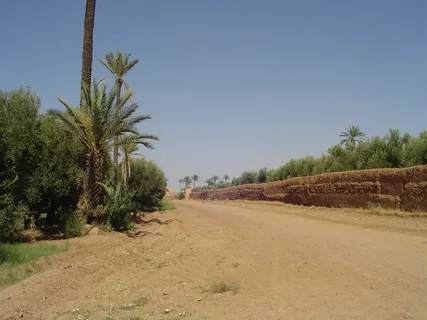
Most gardens you visit while traveling feel frozen in time, trimmed paths, signs everywhere. People are taking photos and leaving. Agdal Gardens in Marrakech are different.
It is also known as Jardin Agdal. The official French name is Jardins de l’Agdal. This is not a garden built to impress visitors. It was constructed to store water, cool the air, feed a population, and provide breathing room for kings. Surprisingly, it still performs all of those functions today.
Agdal Gardens isn’t only for sightseeing, it’s more like entering Marrakech’s everyday rhythm, which began about 900 years ago and hasn’t truly stopped.
Agdal Gardens Designed to Be Useful, Not Just Beautiful
Agdal Gardens were created in the 12th century during the Almohad rule. From the beginning, they were practical. Beauty came later, almost by accident.
The trees here were planted for food. The pools were dug for water storage. The walls were built for protection, not views.

Even today, the gardens remain a working orchard. Olive trees, orange trees, fig trees, pomegranates, these aren’t decorative. They are cared for, harvested, and used.
That’s what makes Agdal Gardens Marrakech special. You’re not walking through a display. You’re walking through a system that still functions.
The Water Is the Real Star in Agdal Gardens
If you look closely, Agdal is really about water, not plants. Long before modern plumbing, water was brought here from the Atlas Mountains using underground channels.
The large pools you see, especially the famous Tank of Health (Sahraj el-Hana), were built to store and control that water.
Even now, these reservoirs quietly do their job. They cool the surrounding air. They feed the orchards. They reflect the sky in a way that makes everything slow down.
Most visitors walk past them without realizing they are seeing ancient engineering still in use.
What Visiting Agdal Gardens Feels Like
This is important to understand before you go.
Agdal Gardens are:
- Quiet
- Wide
- Simple
- Unpolished
There are no cafés. No gift shops, no signs telling you where to stand. The paths are dusty. The trees grow naturally. The silence feels intentional.
If you expect colorful flowers and perfect symmetry, you may be disappointed. If you enjoy space, shade, and calm, this place stays with you.
When You Can Visit Agdal Gardens (And Why That Matters)
The fact that Agdal Gardens in Marrakech aren’t always open is part of their narrative.
Typically, they are open on Fridays and Sundays. However, this isn’t a rule; it depends on the presence of royals in the area. Sometimes they close without notice.
The gardens are prevented from becoming a crowded attraction by this restricted access. The experience is more important when you enter, since it seems like you’re seeing something that isn’t for everyone.
Tip: Always ask your riad or hotel on the same day you plan to go.
Best Time to Walk Through Agdal Gardens
Agdal Marrakech Gardens change with the light, and that’s what makes them special. There isn’t a perfect time to visit. Each hour shows a different side of the garden.
Everything feels soft in the early morning. The gardens seem to be just waking up, the walks are peaceful, and the air is colder.
Before you see birds, you hear them. Your footsteps sound louder because there’s no noise around you. This is the best time if you like walking without a plan.
The late afternoon has a softer feeling. The trees provide a warmer shade, the sun drops lower, and shadows lengthen. After the day, the area feels serene once more as the heat subsides. The Atlas Mountains can be seen in the distance on clear days, practically without drawing notice.
The best times to view the gardens are in the spring and fall. Walking is effortless, the trees feel full, and the weather is pleasant.
It can be hot in the summer, especially at noon. But even then, you can see why this garden was constructed the way it was. The air is cooled by the trees, the lake, and the open area. Although it’s not always comfortable, it seems genuine.
Small Details Most People Miss at Agdal Gardens
Agdal Gardens don’t ask for attention. To see them, you must slow down. The walls are worn and uneven. They weren’t designed to be flawless. They have lasted because they were designed to last.
It is simple to overlook the water channels. Some hide under the ground, while others sprint silently along it. In many locations, these channels still transport water from a great distance.
People can occasionally be seen working among the trees. They move slowly and calmly. This isn’t something arranged for visitors. It’s just part of the garden’s daily life.
And then there’s the silence. Not complete silence, but the kind that lets small sounds stand out. A breeze through leaves. Footsteps on dirt. Birds are resting near the water. If you pause and stop walking, even for a minute, the garden begins to feel alive in a quiet way.
Things to Know Before You Go to Agdal Gardens
Agdal Gardens are simple, and it helps to know that before you arrive.
There are no cafés or shops inside. Nothing to distract you. Bring water, especially on warm days. The paths are natural and dusty, not polished. Comfortable shoes will make the walk easier.
Only certain parts of the garden are open to visitors. Some areas stay private, and that’s okay. It keeps the space from feeling crowded or overused.
The gardens don’t always follow a fixed schedule. They can close without notice, depending on royal activity nearby. It’s best to ask your hotel or riad on the same day you plan to visit.
Most of all, come without expectations. This is not a place designed to impress. It’s a place designed to work, to last, and to stay quiet.
Nearby Attractions Around Agdal Gardens
Agdal Gardens sit in a quieter part of Marrakech, but there are a few places nearby that pair well with your visit. You don’t need to rush. These spots work best if you enjoy slow travel.
Menara Gardens
Just a short drive away, Menara Gardens are one of Marrakech’s most famous green spaces. Like Agdal, they were built for function, not decoration.
The large water basin, olive trees, and the simple pavilion make it a good contrast. Menara feels more open and scenic, while Agdal feels more private and enclosed.
The Royal Palace (Exterior Only)
Agdal Gardens are close to the Royal Palace, though visitors cannot enter. Still, walking near the palace walls gives you a sense of scale and importance.
The high walls and guarded gates remind you that this area has always been tied to royal life.
Saadian Tombs
If you want to add history after your garden walk, the Saadian Tombs are nearby. They are detailed and decorative, very different from Agdal’s simplicity.
Visiting both in one day shows two sides of Marrakech’s past: quiet function and royal display.
Other Gardens in Marrakech Worth Visiting
Marrakech has many gardens, and each one feels different. Visiting more than one helps you understand the city better.
Jardin Majorelle
This is the most famous garden in Marrakech. It’s colorful, artistic, and carefully designed. Unlike Agdal, Majorelle is busy and very popular.
It’s beautiful, but it feels curated. Agdal feels natural and lived-in. Seeing both helps you appreciate the contrast.
Cyber Park Arsat Moulay Abdeslam
Located near Medina, this park mixes history with modern life. Locals come here to walk, relax, and use free Wi-Fi. It’s smaller than Agdal but easy to visit if you’re staying near the old city.
Arsat Moulay Abdeslam (Koutoubia Gardens)
Near the Koutoubia Mosque, these gardens are great for a short walk. They are well-kept and central, making them a good stop between sightseeing spots. They don’t have the depth of Agdal, but they offer shade and calm.
Anima Garden (Outside the City)
If you’re willing to travel a bit, Anima Garden is more artistic and modern. It’s very different from Agdal Gardens and feels more like an outdoor art space. Some people love the contrast, others prefer Agdal’s simplicity.
How to Combine Agdal Gardens With Other Stops
Agdal Gardens work best as a slow start or quiet break in your day. Many travelers combine them with:
- Menara Gardens in the same morning
- A relaxed lunch nearby
- Historic sites like the Saadian Tombs later in the day
This way, Agdal doesn’t feel rushed or forgotten. It becomes a pause between busier moments in Marrakech.
Conclusion
In a city changing fast, Agdal Marrakech Gardens remind you that Marrakech was built on balance. It’s between water and land, work and rest, privacy and openness.
This garden survived not because it was beautiful, but because it was useful. And somehow, that makes it beautiful now. It’s not perfect, not loud. It’s not designed for attention. Just quietly doing what they have always done.
FAQs
Is Agdal Gardens worth visiting?
Yes, if you enjoy quiet places and real history. They’re calm, simple, and full of atmosphere.
Is Agdal Gardens good for photography?
Yes, especially if you enjoy natural and calm scenes. Early morning and late afternoon light work best.
Is Agdal Gardens suitable for children or families?
Yes, but older kids would benefit more from it. There are no kid-friendly play places or attractions.
Are Agdal Gardens open for the whole week?
No. Usually only open on Fridays and Sundays. Always check before you go.
Is there a cost to enter?
Entry is usually free, but it can change; always check locally.
What is Jardin Agdal Marrakech?
It’s a historic garden and orchard stretching over hundreds of hectares in Marrakech.


