



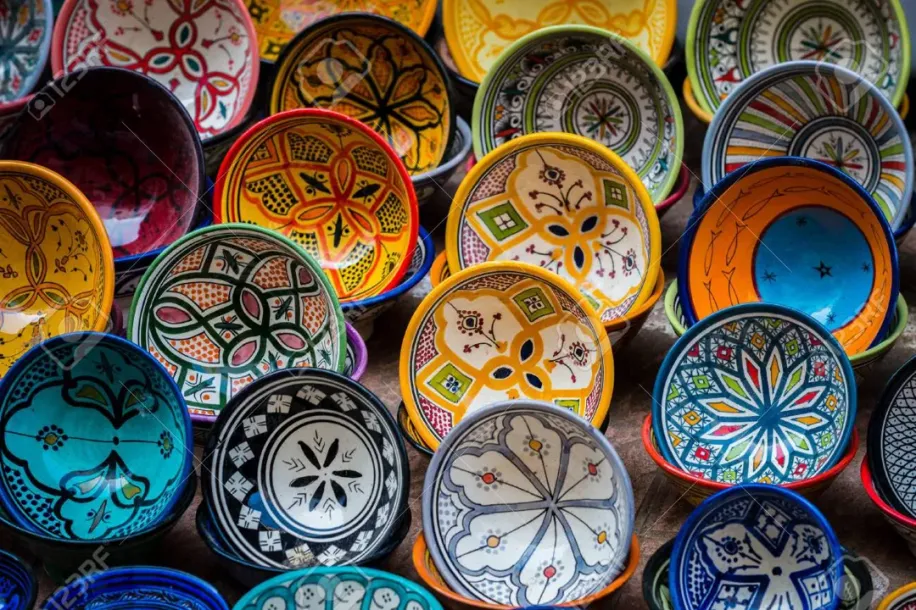
Moroccan ceramics reflect a deep cultural heritage—they are more than just beautiful objects. It shows traditional craftsmanship, and rich oral history passed on through generations. Each one, be it a hand-painted vase, a colorful plate, a detailed mosaic tile, would contain life, color, and meaning in its worth to any space.
Ceramics made using traditional methods dating back thousands of years help preserve and celebrate history. From bold patterns to bright colors, every piece circulating the world tells its own story about Moroccan heritage.
Whether in daily mealtimes or for home decoration, they give every kind of setting warm, personal, and international touches.
This blog will take a closer look into Moroccan pottery and ceramics. You will learn about how they are made, their history, and easy ways to put them to use in your home today.
Unique Features of Moroccan Ceramics
These ceramics are alive with brilliant colors and bold patterns and are handmade.Each piece is handmade by skilled artisans using age-old techniques passed down through generations. Therefore, no two pieces are alike; each is, in fact, dissimilar. Bold designs and spectacular colors, including blue, red, and green, usually attract the eye. These ceramics are useful but are also a work of art, giving credence to their very own regard, that of artistically formed products. Thus, this is what would greatly differentiate Moroccan pottery from its factory-made counterparts.
Key Features of Traditional Moroccan Ceramics:
- Hand-thrown pottery made of pure clay
- Glazed surfaces with pure greens, blues, and yellows
- Mosaic tiles, known as zellige, are a hallmark of Moroccan architecture
Every piece is a story—a family workshop, a local tradition, and a heritage made from Berber, Arabic, and Andalusian influences.
How Are Moroccan Ceramics Made?
The slow, careful process in making Moroccan vases or ceramics involves:
1. Shaping Clay
Artisans shape wet clay using a potter’s wheel or by hand. It is a procedure requiring complete skill and patience.
2. Drying & Firing
As soon as it takes shape, it will dry all it needs and then will be fired in a traditional kiln, which sometimes goes on doing such for ages wood-fired for an old-world feel.
3. Hand Painting
After the first firing, designs are painted using mineral-based pigments and brushes made from goat hair.
4. Glazing & Final Firing
Potters then glaze all these pieces. Glazing adds shine and durability. Then it goes into fire again to seal the colors and patterns.
Most Popular Moroccan Ceramic Pieces
The following pieces are the most loved types of Moroccan ceramics from rustic villages to high-end interiors:
➤ Moroccan Vases
- Tall or rounded
- Often used for dried flowers or as statement décor
- Bright colors with traditional motifs

➤ Tagines (Cooking Pots)
- Iconic cone-shaped dishes used in Moroccan cooking
- Functional yet decorative
➤ Moroccan Ceramic Tiles
- Known as Zellige tiles
- Perfect for walls, kitchen backsplashes, floors, fountains
- Available in both geometric and floral styles
➤ Tea Cups & Serving Plates
- Used in Moroccan tea rituals
- Feature Arabic calligraphy, star shapes, and repeating patterns
Moroccan Pottery Production
The most famous Morrocans pottery hubs are Fès, Safi, and Marrakesh. Here is why:
- Fès: It is famous for blue-and-white pottery and Moroccan ceramic tiles
- Safi: A coastal town known for mass ceramic production
- Marrakesh: A mix of traditional and modern ceramic designs
These cities are home to family-run studios and souks, where you can watch artisans at work.
Decorating with Moroccan Ceramics
Want to add warmth, color, and personality to your space?
Use Moroccan Vases as Accent Pieces
Place them on entry tables, bookshelves, or window sills. Fill them with dried palms or leave them empty — they stand out on their own.
Mix and Match Tiles
Moroccan ceramic tiles can be used on:
- Bathroom floors
- Kitchen backsplashes
- Outdoor garden walls
- Tabletops
Mix colors and shapes for an eclectic, yet cohesive vibe.
Host with Moroccan Dishes
Serve food on ceramic platters or use tagines for family dinners. It’s both functional and festive.
Are Moroccan Ceramics Durable?
Yes — when properly glazed and fired, Moroccan pottery and ceramics are quite durable. They can last for decades if handled with care.
Tips for Maintenance:
- Avoid sudden temperature changes (e.g., don’t place cold water in a hot tagine)
- Hand wash instead of dishwashing
- Use felt pads when placing on furniture
The Popularity of Moroccan Ceramics
Moroccan ceramics blend function with beauty, making them timeless décor pieces. Their global popularity is driven by:
- The rise of boho and eclectic interior styles
- Interest in handcrafted, sustainable goods
- Cultural appreciation for Moroccan design and history
People love them because they are:
- Authentic: Each piece is made by hand
- Colorful: Bold hues add energy to neutral spaces
- Versatile: Works in both modern and traditional settings
Conclusion
Ceramics traditional to Morocco are far more than just beautiful pieces. Their stories, cultural flavour and strikingly eclectic beauty infuse life to even the dullest of spaces. Each piece, from hand-painted vases to bright serving plates and highly detailed mosaic tiles, brings something unique.
These crafts are cared for, skilled and sometimes handed down through the generations. Your space becomes more personal and worldly, as art and heritage combine to make your decor truly stand out.
From your kitchen to your living room and, perhaps, even your garden, Moroccan pottery adds that color of warmth. It’s not just a decorative item; more than that, it is a piece of history from Morocco. These pieces are made for homes, shops or gifts, taking the ordinary out of everyday life moments and imprinting meaning into them.
Want Moroccan ceramics in your home or stores but thinking of now? Well, here are the best periods to get out and about.
FAQs About Moroccan Ceramics
What is Zellige?
Zellige is a form of a tesserae of Moroccan ceramic tile made from individually hand-cut pieces of terracotta and glazed and set into geometric patterns.
Are Moroccan vases only decorative?
Not at all. Most of the Moroccan vases will hold water for fresh flowers, but for most, it is used for decoration purposes owing to its detailed paint and finish.
Can I use Moroccan pottery for food?
Yes, but ensure that it has food-safe glaze. Tagines, plates, and cups are generally made while keeping that in mind.
Is Moroccan ceramic expensive?
Prices vary. Hand-painted pieces from artisan studios may be pricier, while mass-produced ceramics from Safi are more affordable.


