



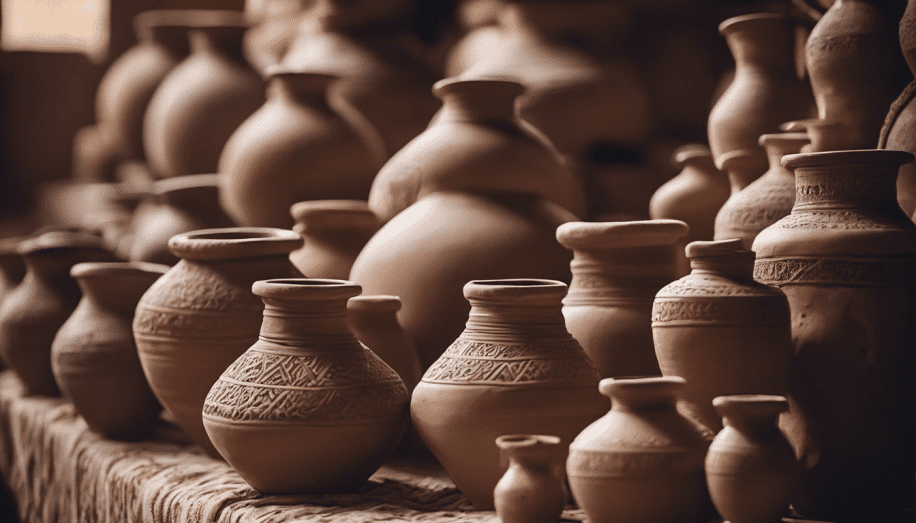
Moroccan Pottery: More Than Function—It’s the Soul of Culture, Art, and Ancient Heritage.
The beauty of Moroccan pottery can be found everywhere—from the colorful souks spilling onto the streets of Marrakech to the tranquil workshops hidden in the silence of the Atlas Mountains.
Every curve and brushstroke tells a story, rooted deeply in the traditions of Moroccan pottery. You’re about to step into an amazing place if those happy colors and strange designs have ever caught your eye. It’s where earth, water, and fire come together to create truly remarkable art.
The Lasting Charm of Traditional Moroccan Pottery
You can find the essence of Moroccan pottery in its traditions. Those skilled artisans have handed down their skills, designs, and secrets from one generation to another. They do this to keep this ancient craft alive through the centuries—and it continues to thrive even today.
Thus, when we talk about traditional Moroccan pottery, we talk not just about useful wares, but about an entire legacy of beauty and practicality.
Moroccan potters traditionally worked with local clay. They used to shape it by hand or on a foot-powered potter’s wheel.
All the differing styles reflect differing geographic origins. We know the bright colorful designs of Fez. It is different from the unadorned earthy colors of the countryside.
What are the main features of traditional Moroccan pottery?
There are so many different kinds of Moroccan pottery designs that it’s truly amazing. Each region has its own character, making these patterns thrilling to explore. You can take special Moroccan pottery classes to learn each style.
-
Fez Pottery
Distinguished by intricate blue and white designs, often with complex geometric and swirling motifs that exude elegance and precision.

-
Safi Pottery
Comes with bold colors, contrasting with simpler designs yet shapes that are striking at times. It is famous for its extensive range of glazed items. You can get plates, bowls, and decorative jars in this style.
-
Tamegroute Pottery
This unique style is defined by the unmistakable green glaze with secret minerals. It comes from the village of Tamegroute within the Draa Valley. This style is earthy with occasional rustic character.
Key Characteristics
-
Bright earth-based pigments (blue for protection, green for nature, red for life).
-
Islamic-influenced geometric, floral, and calligraphic motifs.
-
A mix of glazed decorative wares and functional unglazed cookware for everyday use.
Discovering Moroccan Pottery Designs is A Visual Treat
Some distinctive aspects identify traditional Moroccan pottery:
- Bright Colors: Bright Colors: Many pottery pieces are painted in deep shades of blue, green, yellow, and red, all derived from natural pigments.
- Geometric Patterns: Fancy geometric patterns are generally borrowed from Islamic art and architecture.
- Floral and Calligraphy Designs: Inscriptions in Arabic and floral decorations add to its extraordinary beauty.
- Glazed and Unglazed: While it has applied beautiful glazes on many of its wares for strength and luster, unglazed pottery-for instance, for cooking and carrying water-has a role to play.
- Functional Shapes: Such wares include cooking pots (tagines), serving trays, decorative vases, and bowls.
Why are the colors used in Moroccan pottery important?
Colors in Moroccan pottery designs are deeply meaningful. Blue denotes protection and the sky; green denotes Islam and nature; yellow, the sun and warmth; and red, life and passion. These natural colors tell stories and impart meaning to every different piece.
Get Your Hands Dirty in Moroccan Pottery Classes
For an avid practitioner, Moroccan pottery classes are an ideal way of immersing oneself in this art. Imagine learning techniques from an artisan, feeling the clay in your hand, and shaping a piece of Moroccan heritage!
Where can you find Moroccan pottery classes?
The workshops in Fez are mostly offering short classes and training on traditional pottery, especially the blue and white ones.
Marrakech is also an active art hub with a number of studios offering basic knowledge in clay pottery wheel and hand shaping.
Online: If you cannot travel, a few Moroccan artists and cultural centers organize online Moroccan pottery classes, virtually bringing the workshop home.
From clay preparation and usage of the pottery wheel to traditional painting and glazing methods, it’s a really hands-on connection into the craft.
The Timeless Beauty of Antique Moroccan Pottery
Beyond new creations, the antique Moroccan pottery world attracts very special collectors and history lovers.
These treasures give a glimpse into the past, holding stories from generations and times gone by.
Older pieces often show signs of wear and aging, which add to their unique character and historical value.
It could also host an array of items from well- preserved utilitarian articles to operatic gorgeous marvels that have been for years, even decades, under the roofs of Morocco.
How can you tell if Moroccan pottery is truly antique?
The eye that has experience and knowledge can spot antique Moroccan pottery:
Signs of Age
The natural signs of age, accompanied by slight changes in colour, small chips or, very often, tiny cracks in the glaze (called crazing), which usually indicate that it is old.
Old Techniques
Many authentic antique pieces were made using the hand-coiling technique, an old method not commonly used today., authentic pieces show techniques that are not commonly used in production today.
Regional Styles
It is essential that you learn their distinct styles in various areas, as it may help you determine its age and authenticity.
Marks
Some artwork although, perhaps in its older versions, might display a mark bearing a name from the artist or workshop.
Consult Experts
For valuable or rare pieces, it’s always best to ask trusted antique dealers or cultural places specific to Moroccan art.
The Elegance of Moroccan Vases: Pottery for Display
Among the many types of Moroccan pottery, what strikes one’s memory is the beauty and versatility that these vases carry. From those tiny and intricate vases made specifically for one flower to the huge, impressive ones that fill the room with a statement- within these are contained Moroccan vases pottery.
All show a bright color and detailed designs one comes across on other Moroccan ceramics. These can be used to hold flowers, serve as statement pieces, or add cultural charm to any space.
What makes Moroccan vases pottery special?
What makes Moroccan vases pottery unique is its capacity to unite aesthetic beauty with stories embedded within cultures.
The slender, hand-painted vase depicts the essences of Moroccan craftsmanship, yet a well-built, unglazed jar does too.
The shapes often resemble construction styles or natural forms, being even closer to the Moroccan landscape and heritage.
Modern Revival & Sustainability in Moroccan Pottery
In today’s world, Moroccan pottery is experiencing a vibrant revival—one that merges age-old traditions with conscious, contemporary values. Young artisans, designer collaborations, and community-driven cooperatives are reshaping the craft to meet modern expectations without losing its soul.
1. Eco-Friendly Materials & Techniques
Many workshops have begun using sustainable, non-toxic glazes and natural pigments derived from minerals and plants. Traditional olive pit or wood-fired kilns are being replaced—or supplemented—with solar-powered alternatives to reduce emissions.
2. Waste Reduction & Local Sourcing
Clay is often locally sourced, minimizing transport-related impact. Leftover clay and broken ceramics are reused or recycled within the workshop, supporting a circular production model.
3. Cultural Preservation Through Cooperatives
Artisan cooperatives across Morocco—especially in Fez, Safi, and Marrakesh—focus on empowering rural potters, often women, by offering fair wages, skills training, and access to international markets. These initiatives ensure the survival of ancient techniques while improving livelihoods.
4. Fusion with Contemporary Design
Many modern Moroccan potters blend tradition with innovation—producing minimalist, neutral-toned collections while preserving signature Moroccan motifs. This makes the art form more appealing for global decor markets without sacrificing authenticity.
5. Ethical Buying Matters
When you buy ethically made Moroccan pottery, you’re not just purchasing decor—you’re supporting a lineage of craftsmanship, sustaining artisan families, and contributing to environmentally responsible production.
Conclusion
Moroccan pottery is not only clay and glaze. It is a dynamic art form that evolves with time while respecting tradition. Hope you got familiar with the incredible beauty through the fascinating history of traditional Moroccan pottery.
You’ve also discovered the special beauty of Tamegroute pottery and the immersive experience of Moroccan pottery classes. Old Moroccan pottery still holds a special charm, and the different shapes of Moroccan pottery vases are also very appealing.
It doesn’t matter if you are an experienced collector, a beginner with an intention to learn or someone who appreciates beauty. The world of Moroccan pottery is captivating.
It’s time to find your own Moroccan treasure! Visit local artisan markets, sources of rare antiques, or consider taking a pottery class and create your own masterpiece!


