



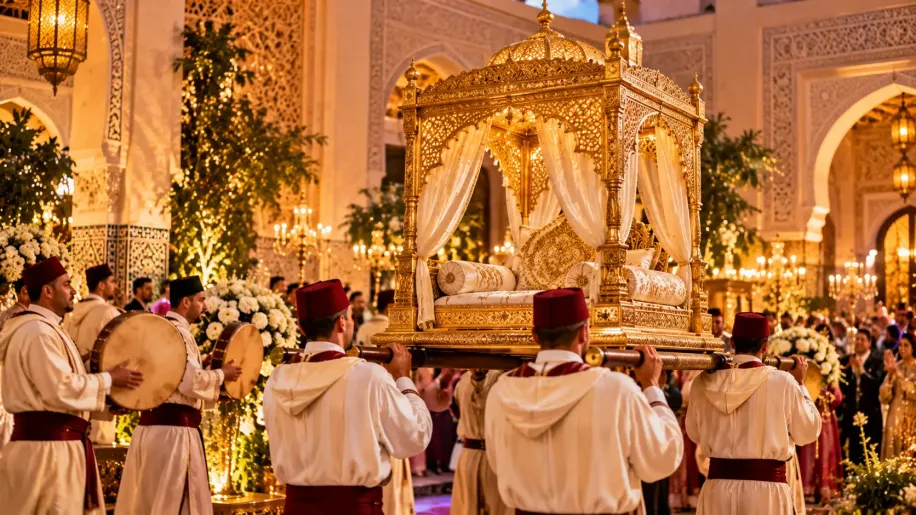
Stay in Marrakech on a summer weekend and, late at night, you may hear it before you see it. A drumbeat rises from a hall on the edge of the city, then a burst of ululation, then the rolling rhythm of dakka marrakchia percussion. Somewhere inside, a bride is being carried shoulder-high on a gilded platform while hundreds of guests clap along. The party will not end until after sunrise.
Moroccan wedding traditions are some of the most elaborate in the world, mixing Arab, Amazigh and Andalusian influences that vary from city to village. This guide explains each stage in the order it happens, from the hammam to the final outfit change, along with what the bride wears, what guests eat and how to behave if you are invited. If you want Moroccan wedding traditions explained without the jargon, start here.
What Are Moroccan Wedding Traditions?
If you are asking what are Moroccan wedding traditions, the short answer is a sequence of rituals spread over several days, each with its own purpose. Most urban families in Marrakech follow a version of this timeline.
| Stage | When | What Happens |
| Gift procession (hdiya) | Before the wedding | The groom’s family brings gifts such as caftans, jewelry, sugar and milk |
| Hammam | A day or two before | The bride bathes with female relatives |
| Henna night | The night before | The bride’s hands and feet are decorated with henna |
| Wedding night | Often Friday or Saturday, from late evening to dawn | Music, the amariya, outfit changes and a long dinner |
| Sabouh | The day after | The bride gives gifts to her new in-laws |
Every family adapts these Moroccan wedding customs to its budget, region and taste, so no two weddings look exactly alike.
How Long Does a Moroccan Wedding Last?
So, how long does a Moroccan wedding last? Celebrations traditionally ran for up to seven days. Today most city weddings take about three days, while village weddings in the Atlas Mountains can still stretch longer.
The main night is a marathon in its own right. One expert writer who has attended several weddings describes guests arriving around 8 pm, dinner landing after midnight and dancing continuing until 5 to 7 am. Invitations rarely mean the stated start time, so arriving an hour or two late is normal.
The Hammam and the Henna Night
Before the main event, the bride visits the hammam with the women of her family. The steam, black soap and scrubbing are part beauty treatment and part ritual of purification. You can experience a version of it yourself at a hammam in Marrakech.
What Is a Moroccan Henna Ceremony?
What is a Moroccan henna ceremony? It is a women-centered evening, usually the night before the wedding, when a henna artist called a naqasha decorates the bride’s hands and feet with fine patterns. Many brides wear green for the occasion, and female guests often receive a small design too. The paste darkens from orange to a deep reddish brown over the following day or two.
Henna carries wishes for luck, beauty and protection, and the practice is now recognized internationally. UNESCO added henna rituals to its intangible heritage list in 2024, in a joint nomination that includes Morocco. Among all the Moroccan wedding rituals, it is the one most guests remember.
What Happens at a Moroccan Wedding Night?
Here is what happens at a Moroccan wedding once the main night begins. Parents welcome guests at the door with dates and milk, symbols of sweetness and purity. The couple usually appears only after an hour or two, so the early part of the evening belongs to the guests, the music and plenty of mint tea.
The Negafa
Behind every traditional Moroccan wedding stands the negafa, a professional bridal attendant who dresses the bride, styles her jewelry and directs her movements through the night. Her role dates back centuries, and she stays at the bride’s side all night, managing every outfit change and entrance.
The Amariya Entrance
The most famous moment of any Moroccan wedding ceremony is the amariya. The bride, and often the groom, sit on an ornate gilded platform that several men lift onto their shoulders and parade around the hall to cheering, drumming and ululation. It can happen several times in one night, once for each grand entrance.
Music and Dancing
Bands play chaabi pop, Andalusian classical music or Amazigh folk songs depending on the family. In Marrakech, groups often perform dakka marrakchia, the city’s own call-and-response percussion style. There is no alcohol at traditional weddings, yet the dance floor rarely empties.
What Does a Moroccan Bride Wear?
What does a Moroccan bride wear? Not one dress, but several. Urban brides typically change three or more times, and some change as many as seven. Each look is dressed by the negafa and completed with a matching crown, belt and jewelry.
- A white or cream caftan for the first amariya entrance
- A takchita, the layered two-piece gown, in rich colors such as green, red or gold
- Regional outfits that honor family roots, such as Fassi, Amazigh or Saharan styles
- Often a white Western-style gown for the cake and final photos
The craft behind these garments is now protected too, as UNESCO inscribed the Moroccan caftan on its intangible heritage list in 2025. If you want one of your own, the souks sell caftans at every price, and the souk bargaining guide will help you negotiate.
What Food Is Served at Moroccan Weddings?
If you are wondering what food is served at Moroccan weddings, expect a long, generous meal that arrives late.
- Sweets, pastries and mint tea while guests arrive
- Pastilla, the sweet and savory pie of chicken and almonds dusted with sugar and cinnamon
- Main dishes such as chicken with olives and lemon, beef with prunes, lamb mechoui or couscous
- Fresh fruit, then more pastries and tea
Food is a central part of Moroccan wedding culture, since feeding guests well is a matter of family pride. To taste these dishes without an invitation, many restaurants in Marrakech serve pastilla and slow-cooked lamb.
How Moroccan Weddings Differ Across the Country
Moroccan marriage traditions change with the landscape. City weddings in Marrakech and Fes usually take place in rented halls with hundreds of guests, live orchestras and elaborate amariyas. Amazigh weddings in mountain villages are more communal, with circle dances, heavy silver jewelry and celebrations that can run for days.
The most famous rural gathering is the Imilchil marriage festival in the High Atlas, held each September by the Ait Haddidou tribe. It grew from a legend of two lovers from rival tribes and today blends a large market with music, dancing and symbolic wedding rituals. A private tour from Marrakech is the easiest way to reach it, as the drive is long. For more on Amazigh customs, see the guide to Yennayer, the Amazigh new year.
Moroccan Wedding Traditions for Tourists
Weddings are private family events, so there is no ticketed way to attend one as a stranger. Still, Moroccans are famously hospitable, and travelers sometimes receive an invitation from a guide, host or friend. These Moroccan wedding traditions for tourists will help you feel at ease.
If You Are Invited
- Dress up. Women can wear a caftan or an elegant long dress, and men a djellaba or a dark suit. Avoid white, which is reserved for the bride.
- Bring a gift. Cash in an envelope is the norm, and household items are also welcome.
- Arrive late and pace yourself. Eat lightly beforehand, since dinner may come after midnight.
- Ask before photographing guests, especially women.
- Join in the dancing when invited. Enthusiasm matters more than skill.
If You Are Not Invited
You can still experience parts of a Moroccan wedding celebration. Book a hammam, have a natural henna design applied by a reputable artist, browse caftans in the souks and try pastilla over dinner. Couples planning their own celebration in the city can find ideas in the guide to romantic stays in Marrakech.
Frequently Asked Questions
How do Moroccan weddings work financially?
How do Moroccan weddings work in terms of cost? Traditionally the groom pays most expenses, though many families now share them. Guests’ cash gifts help offset the bill.
How much money should you give at a Moroccan wedding?
There is no fixed rule. A few hundred dirhams in an envelope is a respectful gift from a guest who does not know the family well, and closer friends usually give more.
Is alcohol served at Moroccan weddings?
No. Traditional Moroccan weddings are alcohol-free, with mint tea, juices and soft drinks instead.
Can children attend Moroccan weddings?
Yes. Weddings are family events, and children often stay up dancing well past midnight.
When is wedding season in Morocco?
Weddings happen all year, mostly on Friday and Saturday nights, but they are rarely held during Ramadan.
Understanding a Traditional Moroccan Wedding Ceremony
From the quiet of the hammam to the noise of the amariya, Moroccan wedding traditions turn a marriage into a community event that can last days. Whether you are a guest or simply curious, knowing the order of events, the meaning behind the henna and the etiquette for gifts and dress will help you appreciate every hour of a traditional Moroccan wedding ceremony.
Want to understand more of the country’s customs? Explore the guide to Moroccan culture before your trip.


