



Marrakech is known for busy souks and red city walls. But the same city also holds some of the most peaceful gardens in North Africa. These gardens are not just pretty photo spots. Many of them are hundreds of years old and show how Moroccan builders used water, shade, and plants to survive the desert heat.
This guide covers every major garden in Marrakech, plus a few hidden green spaces most visitors miss. You will find history, ticket prices, opening hours, and simple tips to plan your visit.
Why Marrakech Has So Many Gardens
Marrakech sits on the edge of a dry plain, close to the Atlas Mountains. Water has always been precious here. Centuries ago, engineers built underground channels called khettaras to bring snowmelt from the mountains into the city. This water fed royal gardens, orchards, and irrigation basins.
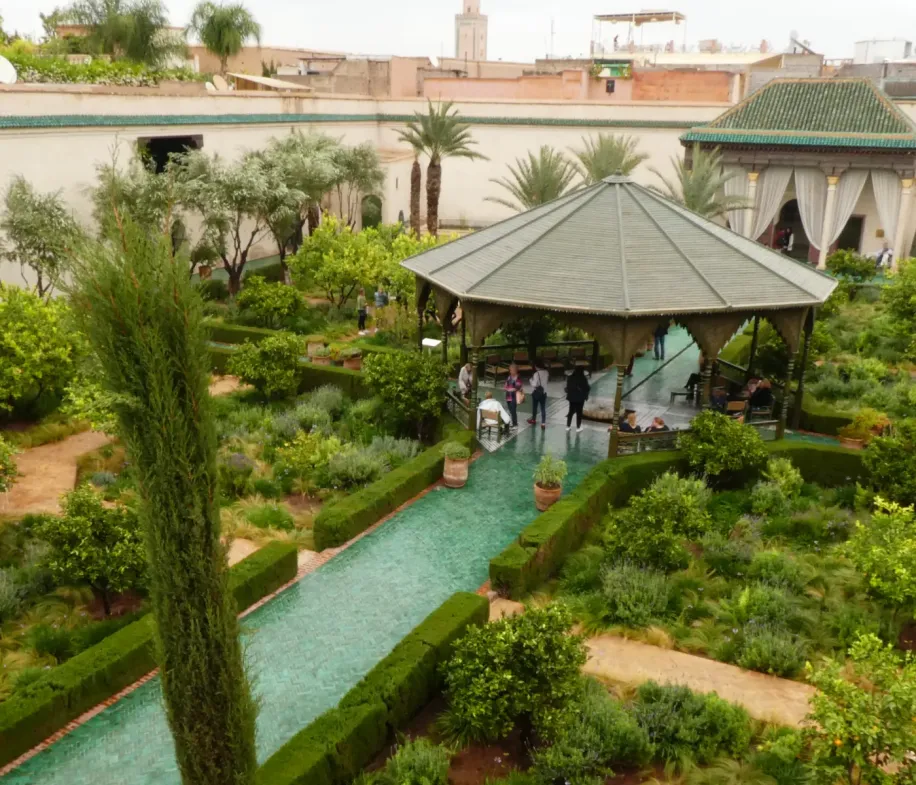
Traditional Moroccan and Islamic gardens often follow a four-part layout called a chahar bagh. Paths and water channels divide the space into four quadrants, with fruit trees, aromatic herbs, and shade plants arranged around a central pool or fountain. This design shows up again and again across the city’s older gardens, including Le Jardin Secret and the Agdal Gardens.
Jardin Majorelle (Majorelle Garden)
Jardin Majorelle is the most visited garden in Marrakech and one of the most photographed spots in Morocco. It sits in the Gueliz district, a short taxi ride from the medina.
French painter Jacques Majorelle designed the garden in the 1920s and 1930s as his own studio and botanical collection. He filled it with plants from five continents and painted the villa and fountains in a bold cobalt blue that now carries his name, Majorelle Blue.

After Majorelle’s death, the garden fell into decline until fashion designer Yves Saint Laurent and his partner Pierre Bergé bought the property in 1980 and restored it. Yves Saint Laurent’s ashes were later scattered in the garden, and a memorial to him stands on the grounds.
What to see
- The electric-blue villa and fountains
- Cactus garden with rare species from the Americas
- Bamboo groves and lily ponds
- Berber Museum, with Amazigh jewelry, textiles, and artifacts
- Yves Saint Laurent Museum next door, covering his fashion career and connection to Marrakech
Practical info
- Hours: roughly 8:00 AM to 6:00 PM from May to September, and 8:00 AM to 5:30 PM from October to April
- Garden entry is a separate ticket from the Berber Museum and the YSL Museum, though combo tickets are available
- Book tickets online in advance, especially between March and October, since the garden regularly sells out
- Arrive at opening time for the quietest visit; tour groups usually arrive after 9:00 AM
- Picnics are not allowed inside the garden
Le Jardin Secret (Secret Garden Marrakech)
Le Jardin Secret sits inside the medina, tucked behind an unmarked riad wall. It is smaller and quieter than Jardin Majorelle, which makes it a favorite for visitors who want a slow, reflective walk.nThe property began as a riad garden owned by a Saadian nobleman in the 16th century.

Over the following four centuries, different Moroccan families owned and modified the site. By the 20th century the garden had fallen into ruin. A private restoration project brought it back to life, reopening it to the public as a museum and garden in 2016.
What to see
- Two gardens in one property: an exotic garden with plants from around the world, and an Islamic garden built on the traditional four-quadrant layout
- A restored tower that visitors can climb for rooftop views over the medina
- Marble fountains and stone water channels that show how old irrigation systems worked
- Rotating art exhibitions inside the riad
Practical info
- Entry ticket includes access to both the exotic and Islamic gardens, plus the tower
- Mid-morning is the best time to visit, since tour groups tend to arrive later
- Located close to the Marrakech Museum and the Ben Youssef Madrasa, so it pairs well with a medina history walk
Menara Gardens (Jardin de la Menara)
Menara Gardens sit on the western edge of Marrakech, close to the road toward the Atlas Mountains. This is the largest and oldest of the city’s famous gardens, and one of the few that costs nothing to enter.
The Almohad Caliph Abd al-Mu’min founded the Menara in 1147, shortly after the Almohad dynasty took control of Marrakech. The garden was never meant to be purely decorative. It functioned as a working agricultural estate, irrigated by an underground channel system that still partly operates today. The Saadian and Alaouite dynasties later expanded the site, and Sultan Abderrahmane added the current pavilion in the 19th century.
What to see
- A large reflecting basin surrounded by olive groves
- The green-roofed pavilion, or menzeh, which reflects in the water and frames views of the Atlas Mountains
- Thousands of olive trees, still part of a working orchard
Practical info
- Hours: daily, roughly 8:00 AM to 6:00 PM
- Free to enter
- Best visited in late afternoon, when the sun creates a golden light on the water and the mountains behind the pavilion
- Facilities are limited, so bring water and wear comfortable shoes if you plan to walk the full grounds
- Unlike Jardin Majorelle, picnicking under the olive trees is generally allowed and is a popular local tradition
Agdal Gardens
The Agdal Gardens sit south of the Royal Palace and are often called the “big sister” of the Menara. They share the same Almohad-era irrigation system and a similar rustic, agricultural feel.
Like the Menara, the Agdal dates back to the 12th century under the Almohad dynasty and was expanded by later dynasties. The gardens cover a huge area of orchards, olive groves, and large water basins.
Practical info
- Access can be limited or irregular, since the gardens sit close to royal property and sometimes close without notice
- Check current access before planning a special trip here, since opening times are less predictable than at the Menara or Majorelle
- If access is closed, Menara Gardens offer a similar historic experience with more reliable opening hours
Anima Garden
Anima Garden is a sculpture and botanical garden located outside the city, about a 45-minute drive from central Marrakech near the town of Ourika.

History
Austrian-born artist and designer André Heller created Anima as a personal project, blending planting design with large-scale art installations. It opened to the public in the 2010s and has since become one of the most talked-about garden experiences near Marrakech.
What to see
- Sculptures and art installations scattered through planted paths
- A wide mix of exotic and local plants
- A small restaurant on site, useful if you are combining the visit with a longer day trip toward the Atlas foothills
Practical info
- Best reached by taxi or private driver, since it sits outside the city
- Plan for about an hour to walk the grounds
- Works well as a stop on the way to or from the Ourika Valley
Cyber Park (Parc Cyber Marrakech)
Cyber Park sits close to the Koutoubia Mosque, right at the edge of the medina. It is a modern public garden rather than a historic site, and it is completely free to enter.
What to see
- Shaded walking paths and open lawns
- Free WiFi access and solar-powered charging points, which give the park its name
- A relaxed, local atmosphere, since this park is used more by residents than tourists
Practical info
- Good option for a quick rest between the Koutoubia Mosque and Jemaa el-Fna
- No entry fee
El Harti Park
El Harti Park is a smaller neighborhood garden in the Gueliz district, popular with local families rather than tour groups.

What to see
- Green lawns, playgrounds, and shaded benches
- A calm, everyday atmosphere that gives visitors a look at local life outside the tourist circuit
Practical info
- Free to enter
- Best for a short break if you are already shopping or dining in Gueliz
The Palmeraie
The Palmeraie is a large palm grove on the northern edge of Marrakech, covering thousands of date palms planted over centuries.

What to see
- Wide open palm groves, popular for camel rides, quad biking, and horseback riding
- Several resort hotels and villas built within the greenery
- A different, more spread-out kind of green space compared to the walled gardens closer to the medina
Practical info
- Best visited by car or organized tour, since the area is large and spread out
- A good half-day activity if you want an outdoor adventure alongside garden scenery
Bahia Palace and El Badi Palace Gardens
Two of Marrakech’s most visited palaces also include notable garden spaces.
- Bahia Palace has courtyard gardens with orange trees, cypress, and fountains, built as part of a 19th-century vizier’s residence.
- El Badi Palace includes sunken gardens built within the ruins of a 16th-century Saadian palace. The scale of the empty basins and orange groves gives a sense of how grand the original palace once was.
Both are worth combining with a medina history walk, since they sit close to each other and to the Kasbah district.
Best Time to Visit Marrakech Gardens
- Spring (March to May): Warm days, blooming flowers, and good conditions across all gardens. This is peak tourist season, so book Jardin Majorelle tickets ahead.
- Summer (June to September): Very hot, often 35 to 42°C. Visit gardens in the morning. Gardens offer some of the best shade in the city during this period.
- Autumn (October to November): Excellent weather and thinner crowds than spring. Many locals consider October the best month for garden visits, and the Menara olive harvest adds extra atmosphere.
- Winter (December to February): Mild days and cool evenings, with snow sometimes visible on the Atlas Mountains behind the Menara basin. Fewer tourists at every major garden.
A Simple Two-Day Garden Itinerary
Day 1
- Morning: Jardin Majorelle at opening time, followed by the Berber Museum
- Late morning: Taxi to Le Jardin Secret in the medina
- Afternoon: Bahia Palace and El Badi Palace gardens
- Evening: Cyber Park for a short walk near the Koutoubia Mosque
Day 2
- Morning: Agdal Gardens if open, or a return visit to the Menara for daylight photos
- Afternoon: Anima Garden as a half-day trip outside the city
- Late afternoon: Menara Gardens at sunset for the classic mountain and pavilion view
Final Thoughts
Marrakech’s gardens tell the story of the city as much as its palaces do. The Menara and Agdal show centuries of engineering built to manage water in a desert climate. Jardin Majorelle shows how one artist’s private obsession became a world-famous landmark. Le Jardin Secret shows how old riad architecture can be brought back from ruin. Spend at least one full day moving between them, and you will leave with a much fuller picture of Marrakech than the souks alone can give you.
Frequently Asked Questions
What is the most beautiful garden in Marrakech?
Jardin Majorelle is the most famous, known for its cobalt blue architecture and rare plants. For a quieter and more intimate visit, many travelers prefer Le Jardin Secret in the medina.
Which gardens in Marrakech are free to enter?
Menara Gardens, Cyber Park, and El Harti Park are free. Jardin Majorelle, Le Jardin Secret, and Anima Garden charge an entrance fee.
Do I need to book Jardin Majorelle tickets in advance?
Yes, especially between March and October. The garden regularly sells out on peak days, so booking online ahead of time is strongly recommended.
Can I have a picnic in Marrakech gardens?
Picnics are generally not allowed inside Jardin Majorelle, since it is a formal botanical garden. Menara Gardens are more relaxed, and picnicking under the olive trees is a common local tradition.
How much time should I plan for visiting the main gardens?
Jardin Majorelle takes about an hour. Le Jardin Secret takes about the same. Menara Gardens can be a quick 30-minute stop or a longer visit if you want to walk the full grounds. Anima Garden needs about an hour plus travel time, since it sits outside the city.
Are the gardens in Marrakech suitable for families with children?
Yes. Menara Gardens, Cyber Park, and El Harti Park work well for children, with open space to walk and play. Anima Garden’s sculptures also tend to interest kids. Jardin Majorelle and Le Jardin Secret are calmer and better suited to slower, quieter visits.
What is Majorelle Blue?
Majorelle Blue is the deep cobalt shade that painter Jacques Majorelle used throughout his garden’s villa, pots, and fountains. He was inspired by the blue tones found in Marrakech’s tiles and in traditional Berber clothing. The color later became closely associated with the garden and with Yves Saint Laurent, who restored the property.


