



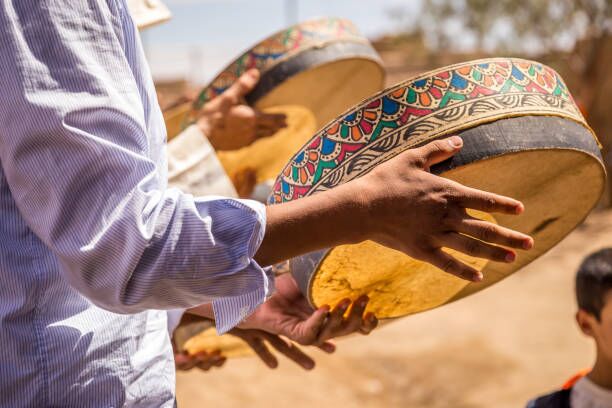
Berber music is one of Morocco’s oldest traditions and remains a vibrant part of its cultural heritage. Also known as Amazigh music, it originates from the Berber people inhabiting the Atlas Mountains, Rif Mountains, and Sahara regions of Morocco.
This music is filled with zest and passion, deeply connected to history. It features upbeat wedding songs, haunting war chants, and beautifully rhythmic lyrical poetry.
The sound of Berber music is something you’ll likely encounter throughout Morocco, from remote mountain villages to desert camps. It is more than just music, it’s a living cultural experience.
What Is Berber Music?
Berber music represents age-old folk traditions that remain alive among its descendants. It includes collective singing, rhythmic clapping, and percussion played on instruments made from local materials such as wood, animal skin, and metal. The songs are generally rendered in Tamazight, one of the major Berber languages.
Berber music appears in many different styles, depending on the region:
- Ahidous: performed by men and women forming large circles in the Middle or High Atlas Mountains, featuring synchronized singing, clapping, and dancing.
- Ahwash-this happens in southern Morocco and is an open performance on a large scale, often during festivals and village celebrations.
- Rways-these are traditional Berber poets and musicians from the Souss region engaged with music in storytelling.
- Guedra: an entirely Saharan, spiritual, and hypnotic form of music characterized by trance-like rhythms and dance.
These styles slightly change from tribe to village but remain faithful to the essence of identity, quite-simple, strong, and connected to the lands.
The Role of Dance in Berber Music
Dance is an essential part of Berber musical performances. The physical movement of the dancers is directly connected to the beat of the drums or hand clapping. Unlike other dance forms where performers dance solo, such as ballet or modern dance, Berber music in Morocco is mostly performed with dancers in groups.
Some of the common Berber Dances:
Ahidous Dance:
Men and women may dance this way together in the form of a large circle and they are often shoulder to shoulder. They clap and dance and step at the time of music. The dance is often accompanied with singing in chronicles. A singer leads the chorus and often develops a line of poetry in between choruses.

Ahwash Dance:
In this style men and women may sometimes dance in separate lines. The movements are often powerful and repetitive, expressing strength and rhythm. The groups can be quite large, often consisting of 30 or more participants. The dance is often performed during a wedding or a local gathering during a festival in the village.
Guedra Dance:
This dance comes from the Sahara and is performed by women. One woman dances while seated or kneeling position with her hands and upper body by slow expressive movements. The dance is very spiritual and is sometimes performed under the stars.
These dances are integral to social and spiritual life, serving purposes beyond mere entertainment. These dances help to unite a community and they are often used to distinguish such social events as weddings, harvest events, and religious holy days.
Common Berber Music Instruments
Berber folk music relies on traditional handcrafted instruments, producing raw rhythms that harmonize with the natural landscape.
1. Bendir (Frame Drum)
One of the most significant instruments in Berber music, it consists of a wooden frame with animal skin stretched tightly across it. The bendir is played using the fingers or palm and usually brings a strong beat when singing and dancing.
2. Rebab (Spike Fiddle)
Berber poets, singers, and musicians, especially from the Souss region, use this instrument to accompany storytelling. The instrument is played with a bow, and typically elicits a softer sound that draws emotion from the listener.
3. Ghaita (Double Reed Flute)
A ghaita produces loud and high-pitched sounds. It is a flighty flute made from wood. This is different from the modern flute. It is usually played only in outdoor festivals or during parades, as the sound is loud and travels long distances.
4. N’goni (String Instrument)
An older version of the banjo, it is made from wood and animal skin, plucked by fingers, and often used to introduce storytelling songs.
5. Tbal (Large Drum)
A large double-headed drum traditionally tied around the waist and played with two sticks. Commonly seen during large group dances like Ahwash and Ahidous.
These instruments are simple, but together they produce a powerful sound that fills open spaces and creates a strong beat for both music and dance.
Where to Experience Berber Music in Morocco
There is no need to look far to listen to Berber music in Morocco. It is played across the country in villages, tourist camps, cultural centers, and public festivals.
1. Marrakech and Fez
These cities have cultural shows with Berber musicians for visitors. Many riads and some restaurants also indicate that there are traditional music nights.
Also read about Fez: The Historical and Cultural Gem of Morocco
2. Atlas Mountains
It is common for visitors to be asked to join in on an Ahidous performance, especially during the wedding season or during religious festivals, if the visitor is on foot through the High Atlas or is staying in Berber villages.
3. Sahara Desert Camps
In either Merzouga or Zagora, desert camps host evening performances of Berber folk music at night campfires. Visitors will hear the bendir, singing, and clapping under the stars.
4. National Festivals
Festivals such as the Timitar Festival in Agadir or Gnaoua Festival in Essaouira have Berber acts attending from across the country. Attending a festival is a wonderful way to see many different Berber music styles in one place.
The Meaning Behind the Music
Many Berber songs tell stories about:
- Love and heartbreak
- Nature and farming
- War and bravery
- Daily village life
- Spiritual connections and prayers
The lyrics are poetic and often improvised. In fact, some musicians are known as Amazigh poets, skilled in creating verses that carry deep meaning while following the music’s beat.
Even if you don’t understand Tamazight, the feeling in the music is clear—joy, sorrow, pride, or hope.
Also read about other popular music in Morocco: Gnawa Music of Morocco: Origins, Instruments, & Festivals
Why Berber Music Still Matters Today
Despite the influence of modern pop music, the Amazigh people continue to love and cherish their traditional music. Young musicians are also creatively building on Berber folk music through their use of new music styles from rap, electronic beats, and other genres to ensure it stays relevant for future generations.
Many Berber families will begin teaching their children the songs and movements of the traditional dance and music when they are young. This act alone ensures that Berber language and identity is not lost in a changing world.
For visitors to Morocco, listening to Berber music is much more than simple entertainment. It is an invitation into the life, history, and soul and imagination of the people who have been living there for thousands of years.
Final Thoughts
With its rich history and joyful rhythms, Berber music serves as one of the most beautiful ways to engage with Moroccan culture. From the deep rhythm of the bendir to the energetic movements of the Ahidous dance, every sound and gesture carries meaning.
If you are planning a trip to Morocco, find a way to hear it performed. Plan to visit a mountain village, stay for a night in a desert camp, or attend a festival. You don’t need to understand the language to feel the soul of the Berber people through their music.
Their stories, drums, and dances will stay with you long after your trip ends.
FAQs
What is Berber music called?
It is called Amazigh music, named after the Berber people, who call themselves the Imazighen.
Does Berber sound like Arabic?
They are different languages, but Berber has borrowed many Arabic words over time, making them sound somewhat similar.
Are Berbers black or Arab?
Berbers are the indigenous people of North Africa; they are a distinct ethnic group, not Arab.
What kind of music is popular in Morocco?
Chaabi (popular folk), Gnawa (spiritual), and regional Amazigh music are the most popular styles.


