



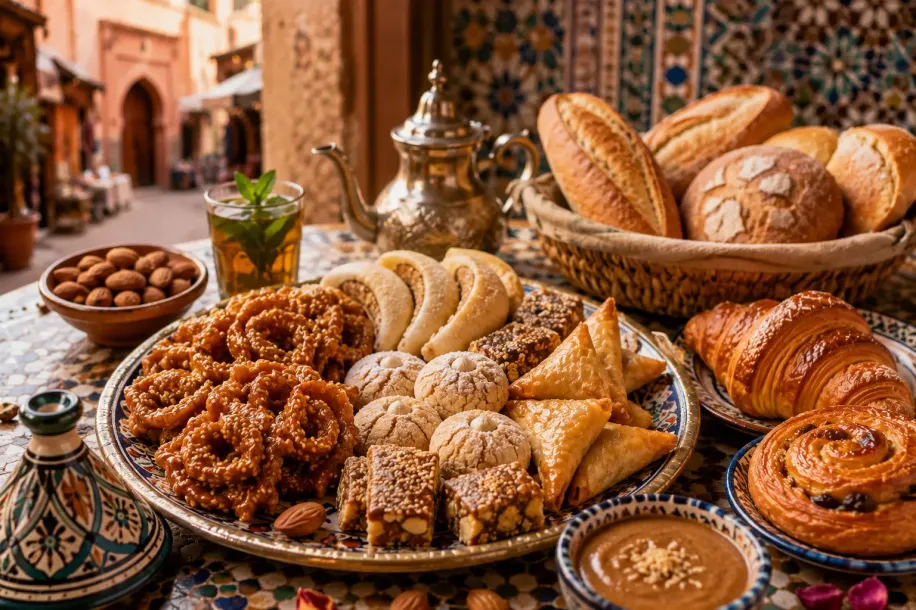
Marrakech smells different depending on the street you turn down. Sometimes it is spice, sometimes it is leather. But my favorite smell in this whole city is warm honey and toasted almonds. It drifts out of small bakery windows early in the morning.
Sweets are not an afterthought here. They sit at the center of Moroccan hospitality. They get served with mint tea to guests. They get cooked for weddings and stacked high on Ramadan tables every evening.
Marrakech also carries a French colonial history, and that shows up clearly in its bakery scene. You get proper buttery croissants a few streets from centuries-old Moroccan pastry houses.
This guide walks through the best of both worlds. It gives you real bakeries with real names. It gives you honest descriptions of how the pastries actually taste. And it introduces the Moroccan sweets worth trying, even if you have never heard their names before.
1. Classic Moroccan Pastries You Need to Know
Chebakia
Chebakia is often called the queen of Moroccan pastry. Sesame and anise dough gets shaped into a small flower. It is deep-fried until golden, then soaked in warm honey.
The result is sticky, sweet, and fragrant. Orange blossom water and cinnamon give it a distinct spiced flavor. This pastry is most linked to Ramadan. It is traditionally eaten to break the fast, alongside harira soup. Good bakeries still sell it year-round.
Kaab el Ghzal
Kaab el ghzal translates to gazelle horns. The name comes from their elegant crescent shape. Inside sits a smooth almond paste, scented with orange blossom water and a touch of cinnamon.
The outer shell is thin and delicate, almost fragile to the bite. These are considered one of the most refined sweets in Moroccan baking. You will see them served at weddings far more than as a casual snack.
Ghriba
Ghriba is a crumbly cookie, sometimes described as a Moroccan macaroon. It comes in several versions, made with almond, sesame, or coconut.
The most iconic style is ghriba bahla. It is known for its cracked surface and rich buttery flavor. Many versions are naturally gluten-free, since they rely on ground nuts instead of wheat flour. It melts in your mouth almost the moment it touches your tongue.
Sellou
Sellou is unusual because it is never baked at all. It is a grainy, dense mixture of browned flour, toasted sesame, and fried almonds.
Honey and warming spices like cinnamon and anise hold it together. It began as travel food for desert caravans. Its high calorie content kept people going for long stretches. Today it is closely tied to Ramadan. It is also traditionally given to new mothers after childbirth.
Briouats
Briouats are small, flaky pastry triangles, folded much like a spring roll. Sweet versions are filled with almond paste and dusted with sugar after frying.
Savory versions exist too, often filled with cheese or spiced meat. The sweet kind often shows up on the same tray as chebakia and kaab el ghzal during celebrations. That gives you a mix of textures in one sitting.
2. Best Traditional Moroccan Pastry Shops
Hakima Halami
Hakima Halami sits on Rue de la Liberté in Gueliz. It has been a trusted name in the city for years. Locals consider it one of the most reliable spots for proper Moroccan pastries done the traditional way.
Chebakia, ghriba, and kaab el ghzal here taste close to homemade. There are no shortcuts, unlike some tourist-facing shops. Prices stay reasonable, and the shop is easy to combine with a walk through Gueliz.
Terrasse des Epices Pastry Shop
This pastry shop sits in Souk Cherifia, in the Sidi Abdelaziz area of the medina. It pairs beautifully with the rooftop restaurant above it. Briouats are a particular strength here, flaky and not overly sweet.
It works well as a mid-souk break. Sit down with a coffee and a plate of assorted Moroccan sweets. Then continue through the market whenever you are ready. The medina setting adds real atmosphere to the whole experience.
Souk Semmarine Pastry Corner
A small shop run by two friendly young owners sits along Souk Semmarine. This is one of the medina’s busiest market streets. Alongside traditional pastries, they also stock a wider range of sweets. These appeal to both local shoppers and curious tourists.
It is an easy stop if you are already deep in souk exploration. You get a quick, authentic taste of Moroccan sweets without much detour.
Bab Agnaou Pastry House
This pastry shop sits right near the Bab Agnaou gate, close to Jemaa el-Fna. Several terraces let you sit and enjoy your pastries with a view.
It is a practical choice for traditional sweets right after visiting the main square. You will not need a taxi or a long walk to reach it.
3. Best French Patisseries in Marrakech
Pâtisserie Amandine
Pâtisserie Amandine sits in the heart of Gueliz. It is probably the most recommended bakery in the entire city. It blends French and Moroccan pastry traditions on one single menu.
You can order kaab el ghzal and halwa chebakia right alongside classic French tarts. Chouquettes and delicate macarons round out the selection nicely. The lemon tart consistently gets praised by visitors, sharp and buttery in equal measure. Small outdoor tables in front of the shop make it a pleasant place to slow down.
Prices sit a little higher than typical Moroccan bakeries. They are still noticeably lower than the same quality would cost back in France. Service is warm and friendly. Staff are used to helping first-time visitors pick between the Moroccan and French sides of the menu.
Les Maîtres du Pain
Les Maîtres du Pain, also in Gueliz, focuses on proper French bread technique. It uses authentic imported ingredients throughout. Baguettes here are genuinely close to what you would find in a good French bakery.
Their specialty leans toward regional French treats. This includes canelés from the Bordeaux region, a rare find here. Around holidays, they also produce intricately carved chocolate eggs. Indoor and outdoor seating both work well for a relaxed breakfast. Mountain views on a clear day make it even better.
Al Fadl Pastry
Al Fadl sits close to the Turkish Mosque in Gueliz. It offers a refined, slightly upscale take on pastry. It leans more toward polished French-style desserts than heavy Moroccan sweets.
If you want something that photographs beautifully and tastes just as good, this is a solid choice. The atmosphere feels a step more formal than most casual bakery visits in the city.
M Avenue Patisserie
For dedicated French viennoiserie, the bakery on M Avenue is a strong pick. It delivers proper opera cake, lemon meringue pie, and buttery croissants. It caters directly to visitors craving something familiar from home.
The setting is modern and clean, closer to a European café. It makes an easy stop if your group has mixed cravings.
4. Best Bakeries for Bread and Everyday Treats
Beyond the pastry-focused shops, everyday Moroccan bread deserves its own mention. Khobz is the round, slightly dense daily bread found across the city. It gets baked fresh and sold at small neighborhood bakeries, rather than fancy patisseries.
Msemen is another everyday staple worth trying. It is a flaky, square flatbread made from wheat flour and semolina. It is often served for breakfast with honey or amlou. Amlou is a rich paste made from toasted almonds, argan oil, and honey. It comes from the Souss region in southern Morocco, home to the country’s best argan oil.
Sfenj is Morocco’s version of a doughnut, sold at small street stalls rather than formal bakeries. It gets fried fresh and served warm, often dusted with sugar. It is best eaten within minutes of coming out of the oil. This is a genuinely local morning treat most tourists never discover.
5. When and How Moroccans Actually Eat Sweets
Moroccan sweets are almost never eaten as one large dessert portion. That is different from what you might expect from a Western bakery visit. They are intensely sweet in small doses. They get paired with mint tea, which balances out the honey and sugar.
A typical household plate might mix chebakia, ghriba, and kaab el ghzal together. This offers variety in texture and flavor, rather than one large slice of anything. This is especially true during celebrations, weddings, and religious holidays.
Ramadan changes the entire rhythm of Moroccan sweets. Chebakia and sellou both see a huge spike in demand during this month. They are traditionally eaten each evening to break the fast, alongside harira soup and dates. If your trip lands during Ramadan, expect bakeries to get busier in the late afternoon. Families stock up on sweets before sunset each day.
Take Away
Marrakech does not really separate its bakery culture into neat categories. A single street can carry the smell of fresh baguettes from one doorway. The next doorway might smell of warm honey instead. Whichever direction your sweet tooth leans, French or Moroccan, this city has both done properly. Trying a bit of each is really the only correct way to do it.
FAQs About Bakeries and Sweets in Marrakech
What is the most famous Moroccan pastry?
Chebakia is widely considered the most iconic Moroccan pastry, especially during Ramadan. It is a honey-soaked, sesame-covered pastry shaped like a flower. It carries a distinct spiced flavor from cinnamon and orange blossom water.
Are Moroccan pastries very sweet?
Yes, most Moroccan pastries are intensely sweet. They are traditionally eaten in small amounts, though. Mint tea is almost always served alongside them. Its slight bitterness helps balance the sweetness of the pastry.
Where can I find good French pastries in Marrakech?
Gueliz is the best neighborhood for French patisseries. It is home to spots like Pâtisserie Amandine, Les Maîtres du Pain, and Al Fadl. Some of these bakeries offer Moroccan sweets on the same menu too.
What should I try if I only have time for one Moroccan sweet?
Kaab el ghzal, or gazelle horns, is a good choice if you want something refined. It is not overly sticky. If you prefer something bolder, chebakia is the better pick. It is especially good if you can find it fresh.
Is sellou available outside of Ramadan?
Yes, though it is most closely tied to Ramadan and postpartum tradition. Sellou is sold year-round in most traditional Moroccan pastry shops. It has a dense, grainy texture, unlike the flaky texture of other Moroccan sweets.
Can I buy Moroccan sweets to bring home?
Yes, most traditional pastry shops sell boxed assortments. These are designed specifically for travel and gifting. Chebakia and ghriba both hold up reasonably well for a few days if kept sealed. They still taste best fresh, though.
What is the difference between a Moroccan pastry shop and a French patisserie in Marrakech?
A traditional Moroccan pastry shop focuses on honey-based, nut-filled sweets. Think chebakia, ghriba, and kaab el ghzal. A French patisserie focuses on butter-based pastries like croissants, tarts, and macarons. Many Gueliz bakeries now blend both styles on one menu.
Is amlou a dessert or a breakfast food? .
Amlou functions more as a breakfast spread than a dessert. It is a thick paste of toasted almonds, argan oil, and honey. It is traditionally eaten with warm msemen or bread, rather than served on its own.


