



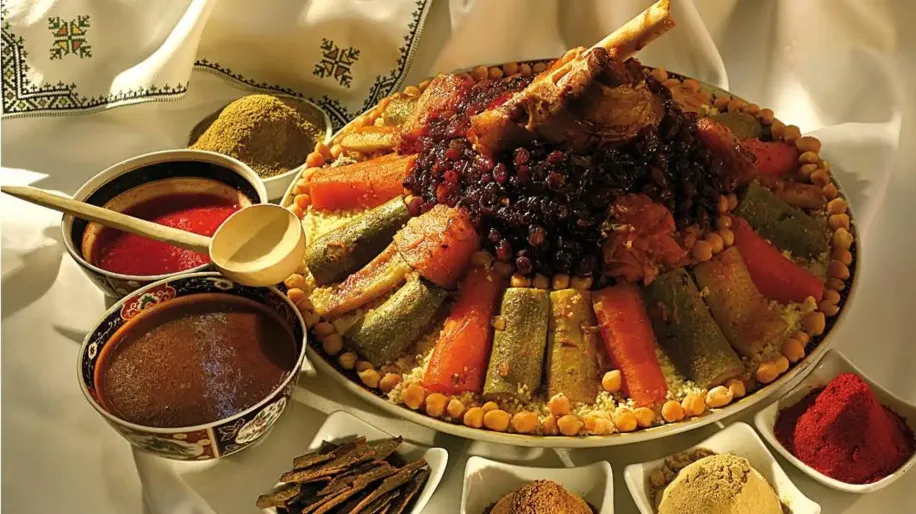
Foodaholics visiting Morocco for the first time must wonder: what is the national dish of Morocco? After all, a country so diversely rich in culture, history, and arts must offer variety for the palate likewise. While the Moroccan spices are world famous, their morning break is a treat with a view on a hot balloon ride (one of the must-adventures to do in Morocco), the national dish of Morocco must be something unique and beyond delicious.
Well, in that case, you are right, the Moroccan couscous, also known as the national dish of Morocco, is a star delicacy. It is known as the traditional Moroccan food alongside the traditional Maghrebi Tea. But what makes the traditional Moroccan Couscous so special and why you should not board the plane back home without having several servings of the local couscous? Let’s find out!
History and Popularity of Couscous in Morocco
An introduction to Moroccan couscous is the first thing you should ask for when trying out the rich Moroccan cuisine. These tiny balls of semolina are packed with so much flavor that make Couscous a popular delicacy in Moroccan culture for the locals and foreign people alike.
The term “couscous” refers to a traditional dish typically made with meat and vegetables, cooked in a flavorful broth and served over a bed of steamed semolina granules (also known as couscous). It is a slow-cooked, complex dish.
The word “couscous” originates from the Berber word keskas, which refers to the utensil used to cook it. In Morocco, what is commonly referred to as “couscous” is called smida, describing the tiny balls of semolina flour made from durum wheat.
As a fundamental dish of Moroccan cuisine, couscous is often prepared in large quantities and is traditionally enjoyed on the national holy day, Friday. It is typically served in a communal dish, symbolizing the opportunity to gather and share with family and friends.
History of Couscous
Couscous has been a fundamental part of the Moroccan and North African diet for centuries, widely enjoyed across the region. The origins of couscous are difficult to trace, but it is widely agreed that it originated in North Africa over 2,000 years ago, with the Berbers, the indigenous ethnic group of North Africa. The Berbers are credited with developing culinary techniques and practices that are still in use today. They also introduced the tagine utensil and are responsible for the well-known slow cooking methods.
How is Couscous Prepared and Served?
Over the years, couscous has seen several variations, each one offering a different flavor than the other. The semolina foundation remains the same while the broth, the mix of vegetables, and the spice blend varies to fit different taste buds. Safe to say, Couscous is no longer a particular route of spices but rather a tradition that is practised widely in different parts of Morocco. And no variation of couscous means you have moved far from the original culture but rather embraced it more.
In most cases, the couscous is served with meat cooked in its broth, steamed vegetables, and topped with nuts and dry fruits for that extra dose of power. As for spices, a different blend of spices is used along with cinnamon powder to sweeten the overall taste.
Couscous with Seven Vegetables
One popular variation of couscous is the seven-vegetable couscous. Here, it is served with a variety of vegetables, including carrot, turnip, courgette, pumpkin, cabbage, aubergine, and chickpeas. These ingredients are simmered together in a flavourful broth infused with herbs such as parsley and coriander, along with spices like turmeric and ginger.

The couscous is served high on a large dish, with the vegetables beautifully arranged on top in alternating colours, and everything is generously covered in aromatic broth.
Couscous with Lamb and Vegetables
This classic Moroccan couscous features tender lamb, slow-cooked with a variety of root vegetables like carrots, turnips, and pumpkin, all simmered in a rich, spiced broth. The lamb’s flavour infuses the couscous, making it a hearty and aromatic dish.
Couscous with Chicken and Dried Fruits
A fragrant combination of chicken, dried apricots, raisins, and almonds, served with couscous. The sweet and savoury flavours of the dried fruits complement the tender chicken, creating a unique twist on the traditional dish.
Protein – Vegetarian Couscous
Packed with a colourful assortment of vegetables such as zucchini, cabbage, and chickpeas, this version is perfect for vegetarians. The vegetables are simmered in a flavourful broth, creating a light yet satisfying dish, perfect for any meal.
Why does Couscous hold importance in Moroccan Culture?
Moroccan culture has in-depth roots when it comes to the souks of Marrakech, Moroccan cuisine, and Moroccan arts. Also, the locals of Morocco pay a lot of attention and hold their traditions dearly no matter how old they are. Similarly, the couscous is an important delicacy in the Moroccan culture for several reasons:
Cultural Tradition and Heritage: As a traditional dish, couscous is deeply woven into the fabric of Moroccan history and customs. It has been enjoyed for centuries and is essential to family gatherings, celebrations, and special occasions, especially on Fridays, the holy day in Morocco.
Symbol of Hospitality and Unity: Couscous is typically served in a large communal dish, emphasizing shared meals and hospitality. It symbolizes togetherness, as it encourages people to gather, eat, and connect with family and friends. It also reflects Moroccan values of generosity and community.
Nutritional and Practical Value: Couscous is a versatile and nourishing dish that sustains the whole family. Made from semolina, it is often served with a variety of meats, vegetables, and legumes, making it a balanced and wholesome meal that supports the daily diet of Moroccans.
In conclusion, couscous is more than just food; it represents tradition, social cohesion, and the Moroccan way of life. Anyone visiting Morocco for the first or tenth time must try out Moroccan cuisine especially the Megherbi tea and the Moroccan Couscous.


