



Marking a civilizational milestone that spans nearly three millennia, Yennayer 2976 endures not merely as folklore but as a vibrant reclamation of Morocco’s indigenous core and a celebration of the land’s eternal fertility.
MARRAKECH – As mid-January arrives, the streets of the “Ochre City” and the rugged peaks of the Atlas Mountains alike are echoing with the greeting, “Aseggas Amaynou.” This marks the dawn of Yennayer, the first month of the Amazigh (Berber) calendar, ushering in the year 2976. In Morocco, this date is no longer a quiet act of domestic resistance; it is a sanctioned national holiday that honors a heritage reaching back to 950 BCE.
The Chronology of Resilience
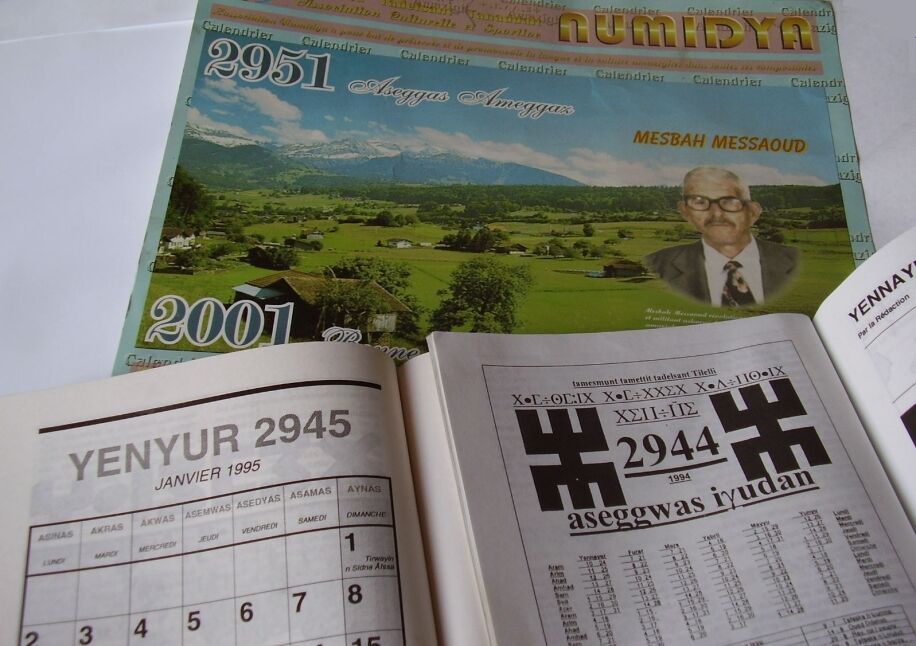
The Amazigh calendar represents a unique reckoning of time, tracing its mythical origin to the ascension of King Shoshenq I to the throne of Pharaonic Egypt. While the narrative blends myth and history—creating a proud story of ancient triumph—the symbolic truth is undeniable. Yennayer serves as a powerful indictment of “enforced amnesia,” proving that the Amazigh soul remains the foundational socle of North African identity.
By the Amazigh count, 2026 CE corresponds to 2976, a lineage formalized by scholar Ammar Negadi to honor the longevity of a civilization that has weathered centuries of marginalization.
Agriculture and the Rituals of the Earth
Fundamentally, Yennayer is a New Year for farmers—a “threshold of the agricultural cycle” known in rural communities as ras l-‘am al-filāḥī. After nearly seven consecutive years of parched fields and drought, this year’s celebrations are imbued with a renewed sense of baraka (blessing).
Families across the Kingdom are engaging in the ritual of azegzaw asgas (greening the year), where women gather fresh herbs and palm leaves to bring a verdant spirit into the home. These gestures are more than superstition; they are a rhythmic prayer for the land’s fertility and the balance between humanity and the spirit world.
A Culinary Repertoire of Prosperity
The centerpiece of Id Yennayer is the communal meal, a ritual designed to symbolically banish famine. In the southeastern oases, the air is thick with the scent of “sebaa khodhar”—the legendary seven-vegetable couscous. In the Souss and Atlas regions, the golden Tagoula (barley porridge) takes pride of place, drizzled with oudi (aged butter) and argan oil.
Around the dinner table, the playful search for the amnaz (the lucky seed) begins. A single date stone is hidden within the communal bowl; the person who finds it is believed to be especially blessed, symbolically “entrusted with the household granary keys” for the coming cycle. This ensures that no one goes hungry into the new year, weaving a message of abundance through every bite.
From Marginalization to National Pride
For decades, Yennayer was exploited as mere folklore or suppressed in the name of political uniformity. However, the constitutional reforms of 2011 and the historic Royal Decree of May 2023 have fundamentally altered the landscape. Today, the sounds of ahwach dances and the ancestral melodies of lutes and rebabs are heard in public squares, celebrated by Moroccans of all backgrounds.
This official recognition is a vital corrective to decades of erasure. It reasserts that Moroccan identity is not a monolith but a rich convergence of Arab, Islamic, and Jewish elements atop an Amazigh foundation.
As the fires of community are lit across the Medina of Marrakech and the remote villages of the Rif, Yennayer 2976 stands as a testament to cultural survival. It is a time to settle disputes, reset social harmony, and look toward a future where diversity is embraced as the Kingdom’s greatest wealth.
Aseggas Amaynou!


